Finishesand care.
Oiled wood is meant to be lived with. It marks, and most marks can be eased.
How to clean it, what to keep away from it, how it moves with the seasons, how to ease a shallow knock on a drawer edge, and when to ask the shop instead.
Every day, by finish
Cleaning, water and repair.
Hardwax oil
- Cleaning
- Damp cloth, a drop of mild soap
- Water
- Shrugs off splashes; wipe up standing water
- Repair
- Shallow marks: sand lightly and re-oil; light scratches usually blend
- Where we use it
- Oak, maple and ash; kitchens, baths and mudrooms
Hand-rubbed oil
- Cleaning
- Dust, then a damp cloth
- Water
- Wipe spills promptly; rings can show
- Repair
- Re-oil the area; light marks usually soften
- Where we use it
- Walnut and cherry; libraries and quieter kitchens
Shellac
- Cleaning
- Dust with a dry cloth
- Water
- Water, alcohol and heat mark it
- Repair
- Padded in with fresh shellac
- Where we use it
- Furniture and cherry rooms, away from water
Fumed, then oiled
- Cleaning
- As hardwax oil
- Water
- As hardwax oil
- Repair
- Light marks re-oiled; anything through the fumed color is a job for us
- Where we use it
- White oak, where a deeper brown-gray suits the room
- Heat. Use a board or a trivet under anything from the oven or the stove, on any finish.
- Standing water. Wipe it up. Oiled wood forgives a splash, not a puddle left overnight.
- Sprays and polishes. Skip them. Silicone polish builds a film that a fresh coat of oil will not bond to.
- Sun. Strong light changes every wood: cherry darkens, walnut lightens. Move things now and then in the first months.
By species
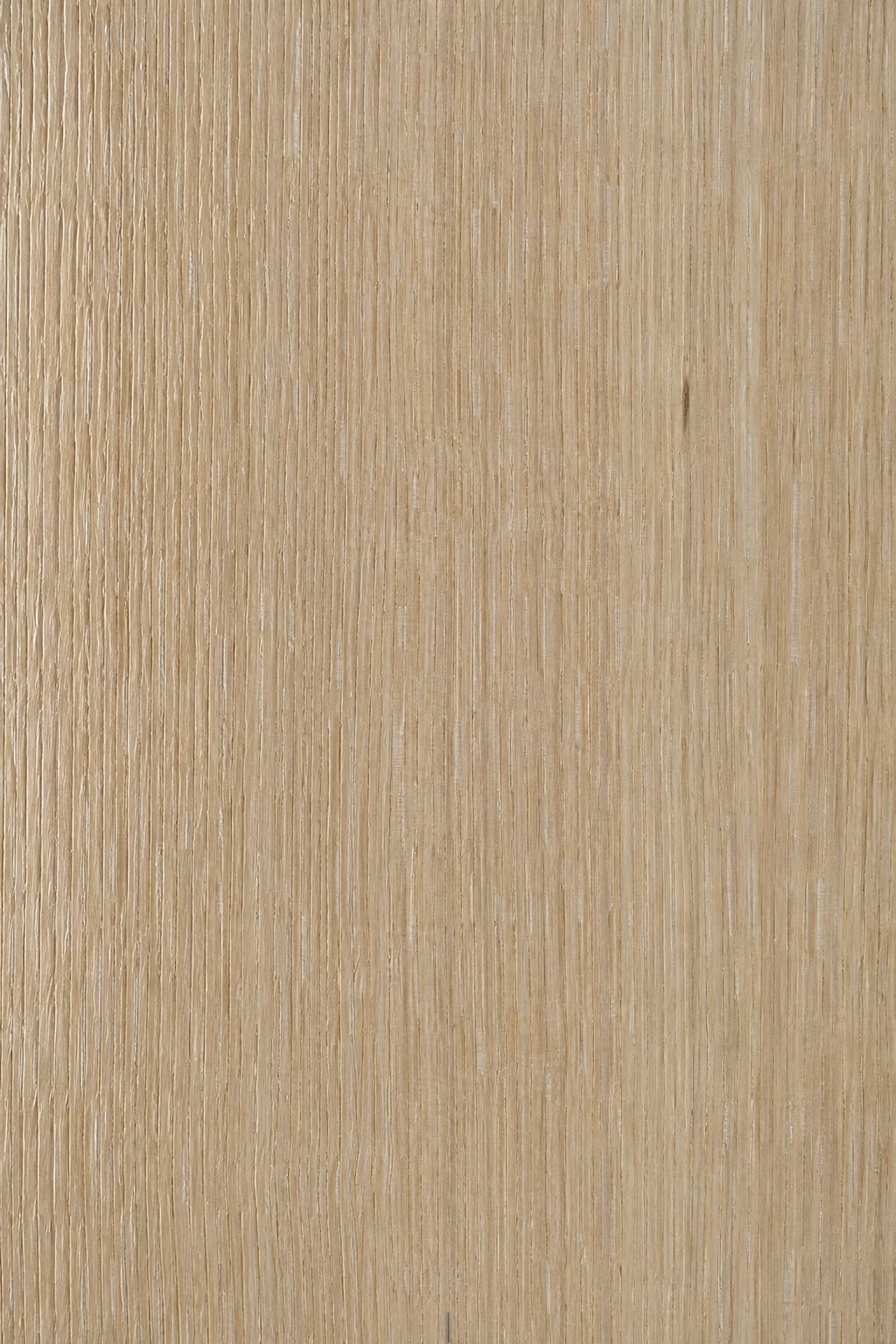
White oak
Hardwax oil: a damp cloth, a drop of mild soap. Keep wet steel off it: the tannin in oak turns black where iron and water meet.
The board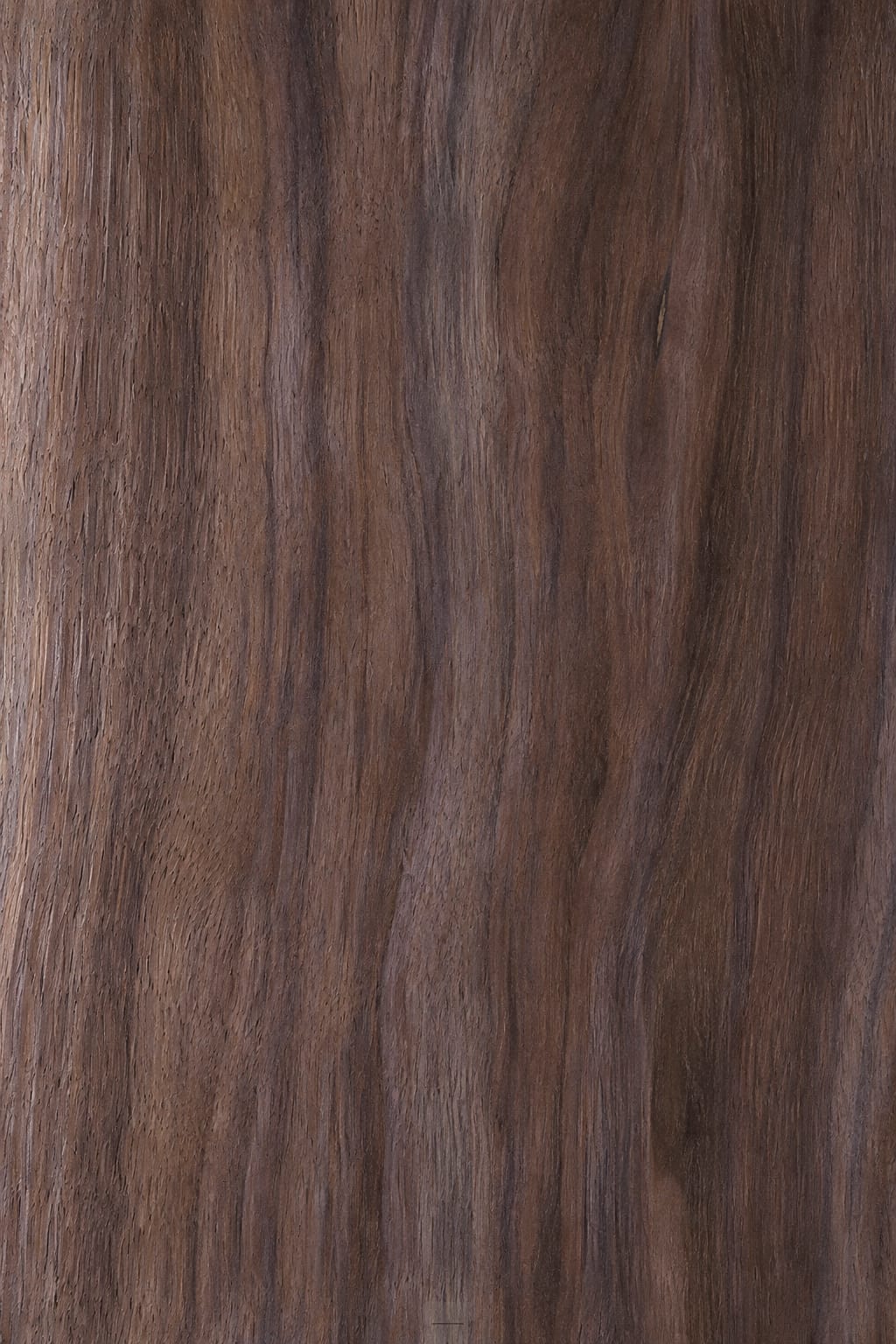
Black walnut
Oil: dust, then a damp cloth. Re-oil when the surface looks dry. Strong sun lightens it, so we draw it away from south windows.
The board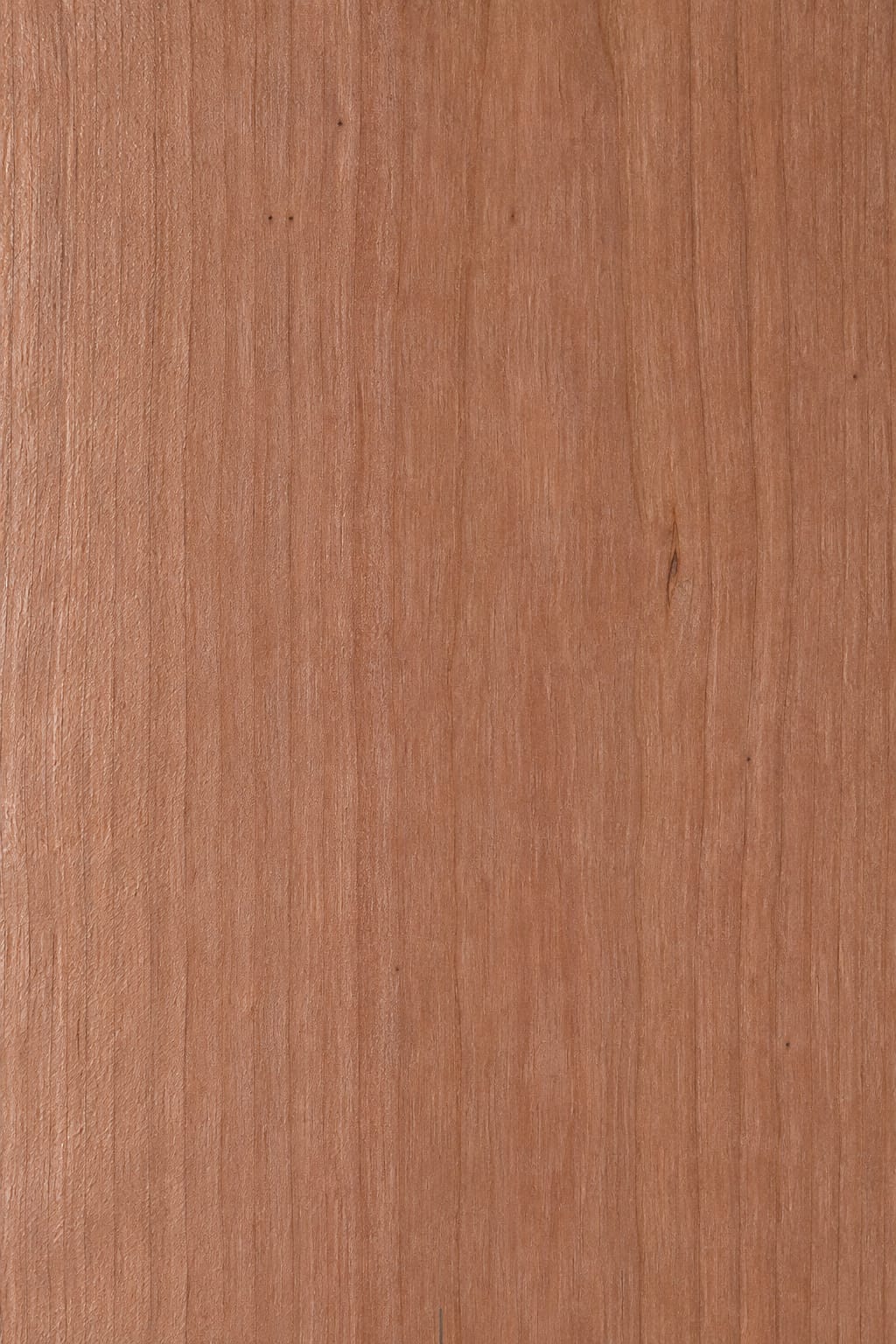
Black cherry
Keep objects moving in the first months: the light darkens the wood around anything left in one place.
The board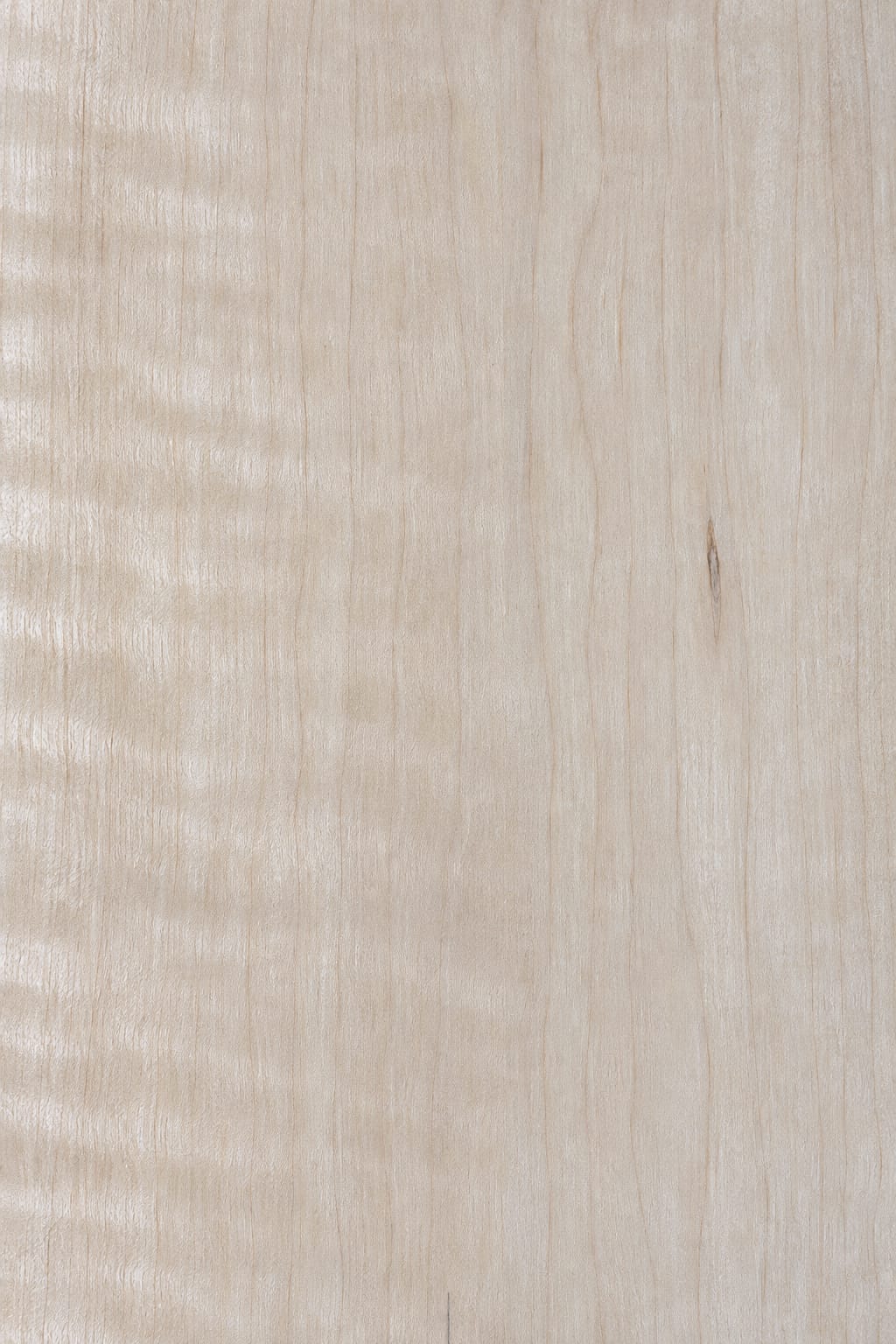
Hard maple
Water-white hardwax oil: a damp cloth. Maple shows dirt before the darker woods do, and cleans up as easily.
The board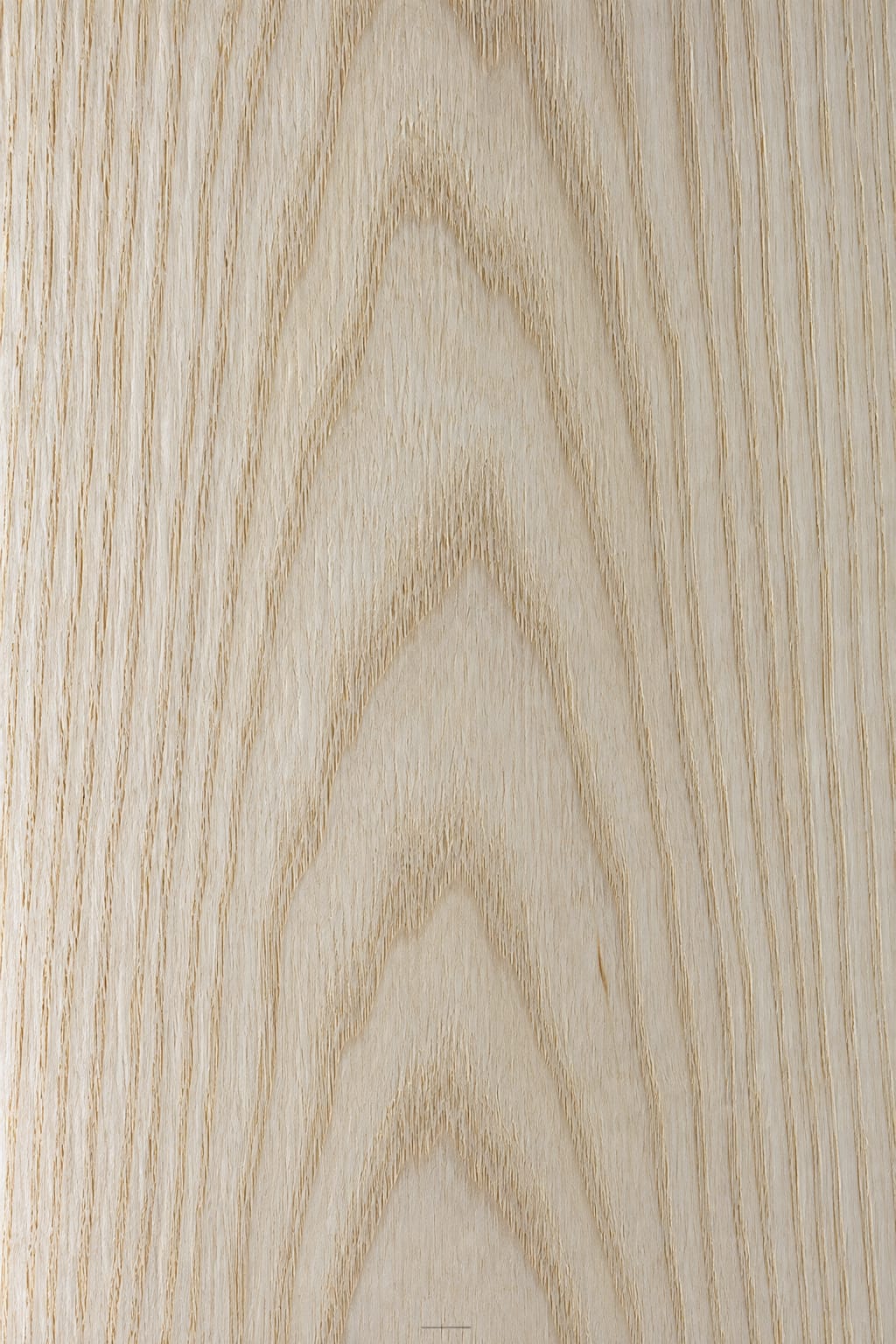
White ash
Hardwax oil: tough and spot-repairable. The open grain holds dirt in a back entry, so a soft brush helps before the damp cloth.
The board
The seasons
Wood moves.We let it.
Solid wood takes up moisture in a humid summer and gives it back in a dry winter with the heating on. It moves across the grain and hardly at all along it.
So doors and panels are built to float in their frames: a panel can be a little wider in July than in January without cracking or pushing a joint open. If you can, keep the house between about 35 and 55 percent relative humidity.
Sheet A-07.1
A knock onthe drawer edge.
A shallow dent and a light scratch on hardwax oil, eased with the tin we leave you. The same spot, four times; the result is an improvement, not a new surface.
- 01 · Fig. 7.1
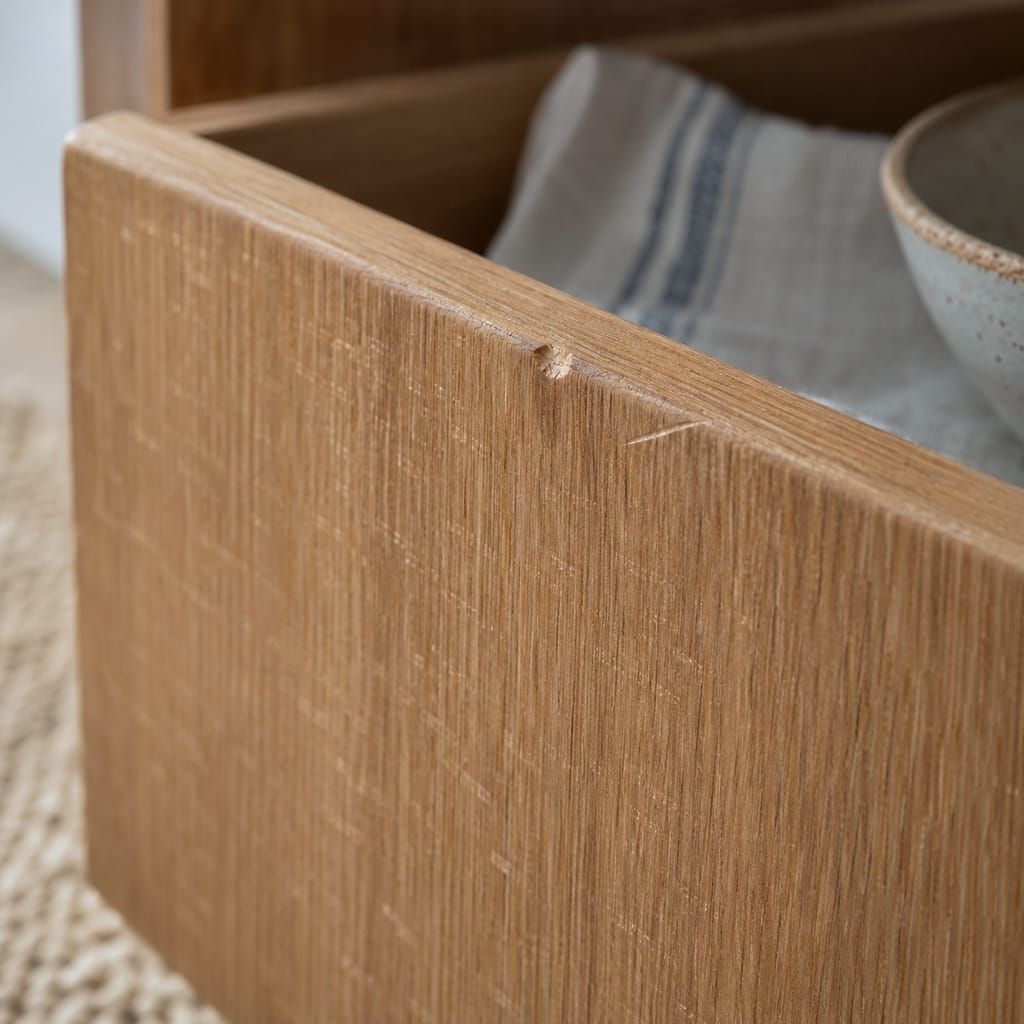
The mark
The mark shown: a shallow dent and a light scratch on the edge of a white oak drawer front, finished in hardwax oil.
- 02 · Fig. 7.2
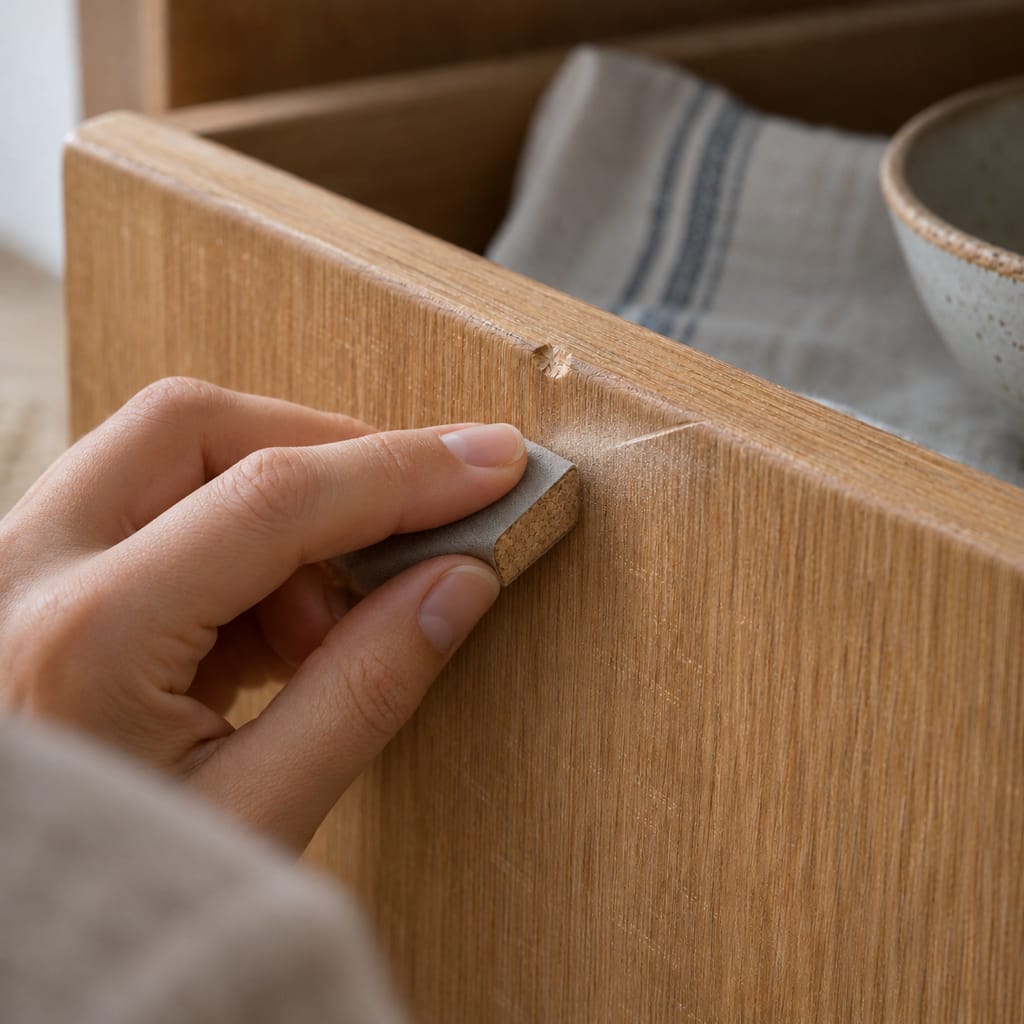
Ease it
Fine abrasive (320 grit) on a cork block, along the grain only, just over the mark. Stop as soon as the scratch is level.
- 03 · Fig. 7.3
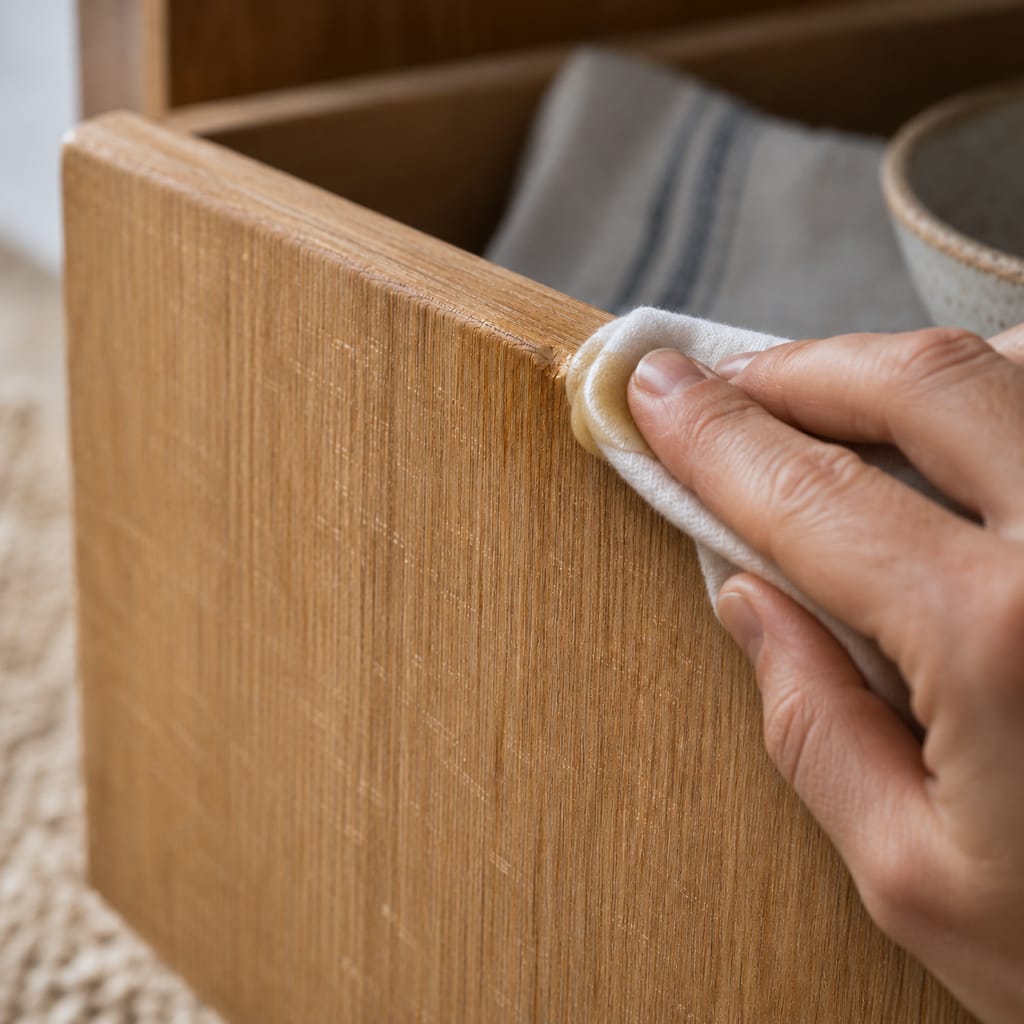
Re-oil
A little of your finish from the tin on a cotton cloth. Wipe off the excess after the few minutes the tin gives.
- 04 · Fig. 7.4
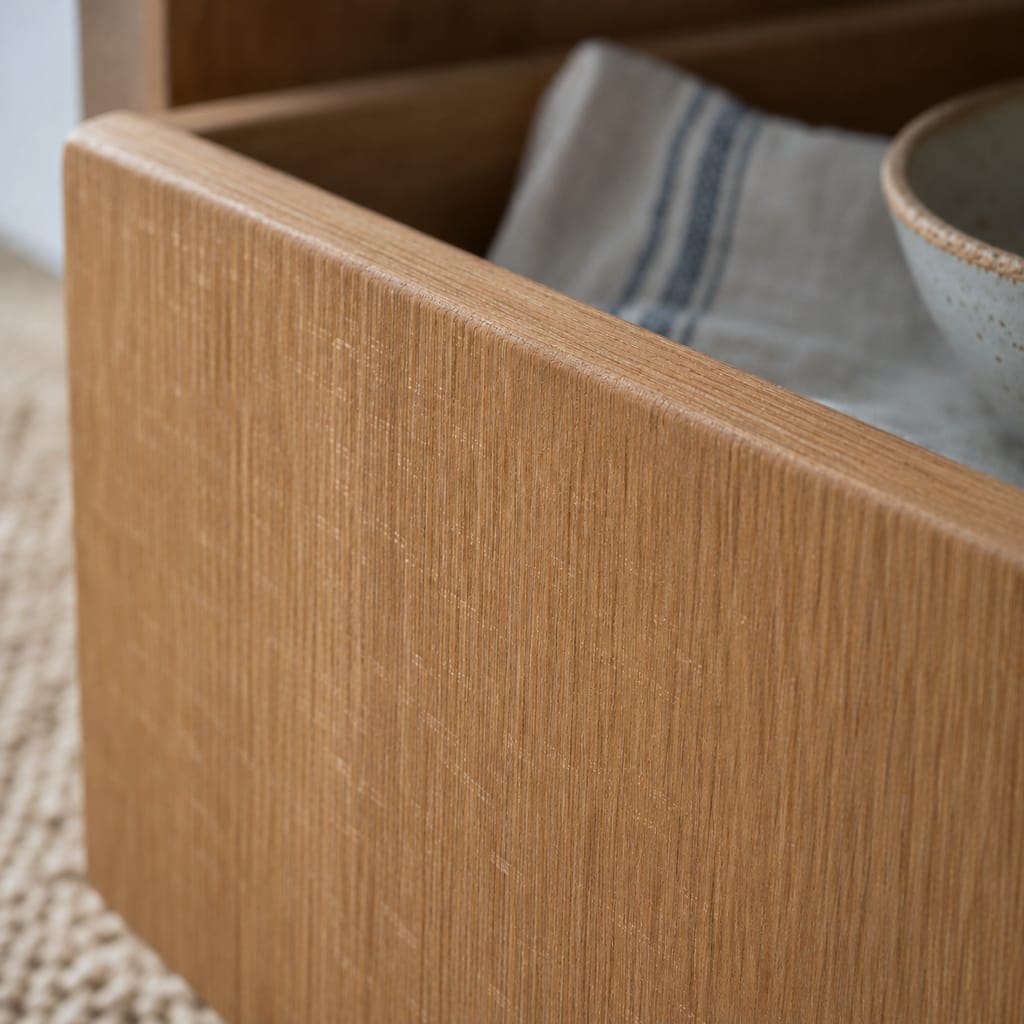
Let it cure
Leave it for the curing time printed on the tin. The scratch blends in; a dent is shallower but can still show in low, raking light.
When to ask the shop. A mark your fingernail catches in, wood showing through the finish, a ring or a mark on shellac or fumed oak, or anything still clear after a second coat: send us a photograph and we will tell you whether it is a visit.
Doors and drawers
Bringing a door back to even.
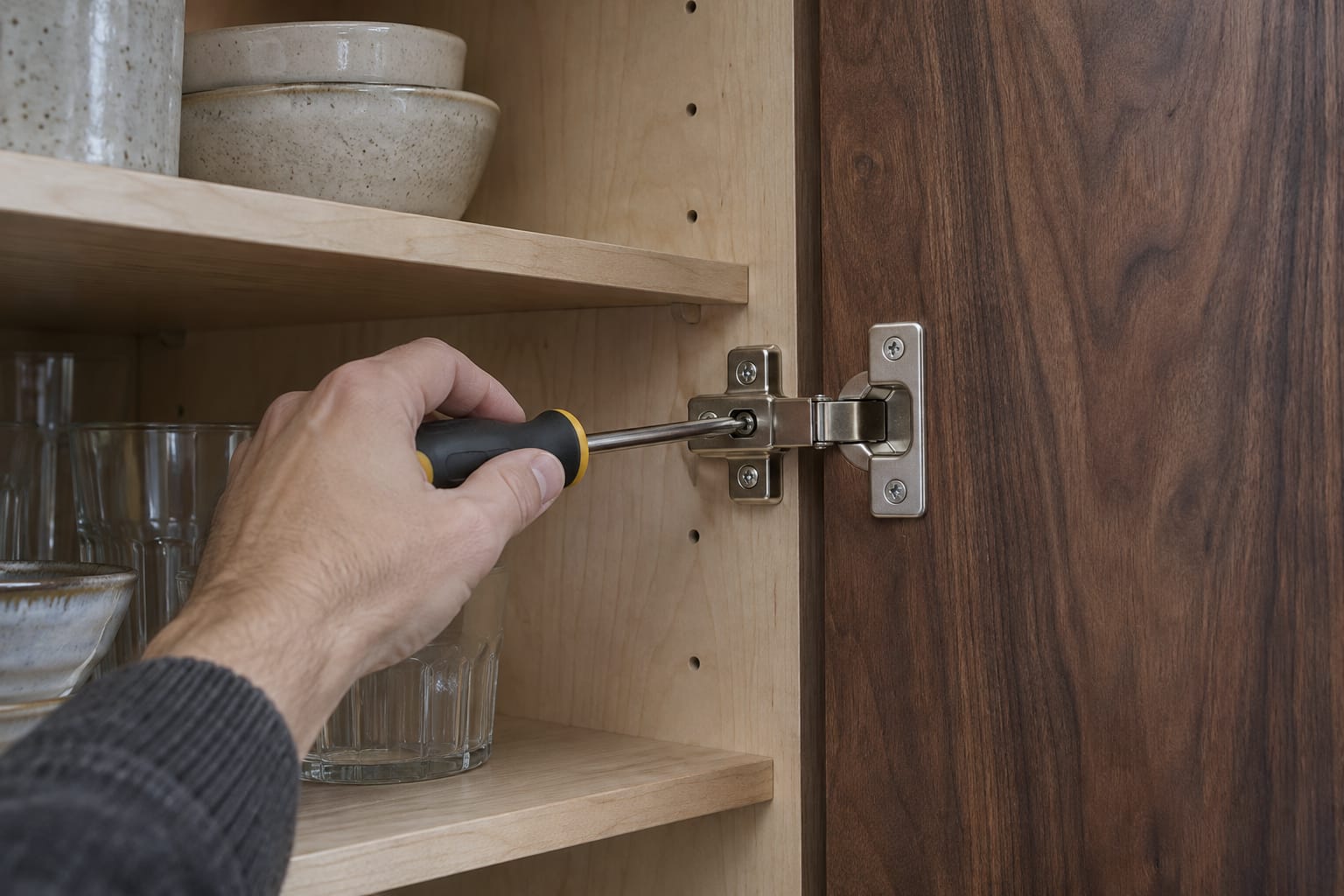
As the wood settles in its first year, a door can drift until its reveal is wider at one corner. Our cabinet doors hang on concealed cup hinges: a cup set into the door, an arm, and a plate screwed to the cabinet side. Two screws on the arm and the two in the plate each correct one direction. A quarter turn at a time is usually enough.
- 1Side to side: the screw on the arm nearest the door moves it toward or away from its neighbor, closing or opening the gap
- 2In and out: the screw at the back of the arm, over the plate, brings the door’s face flush with the cabinet
- 3Up and down: the two screws in the plate’s slots. Loosen both a little, raise or lower the door, and tighten them again
Pivot doors in a library and drawers on full-extension runners adjust differently; those are part of the first-season visit. If a screw turns without moving the door, stop and write to us.
Brass and bronze
Unlacquered brass darkens where hands don’t touch it and stays bright where they do. Leave it to patina, or rub it bright with a brass polish now and then. Either is right; just keep the polish off the wood.
What we leave
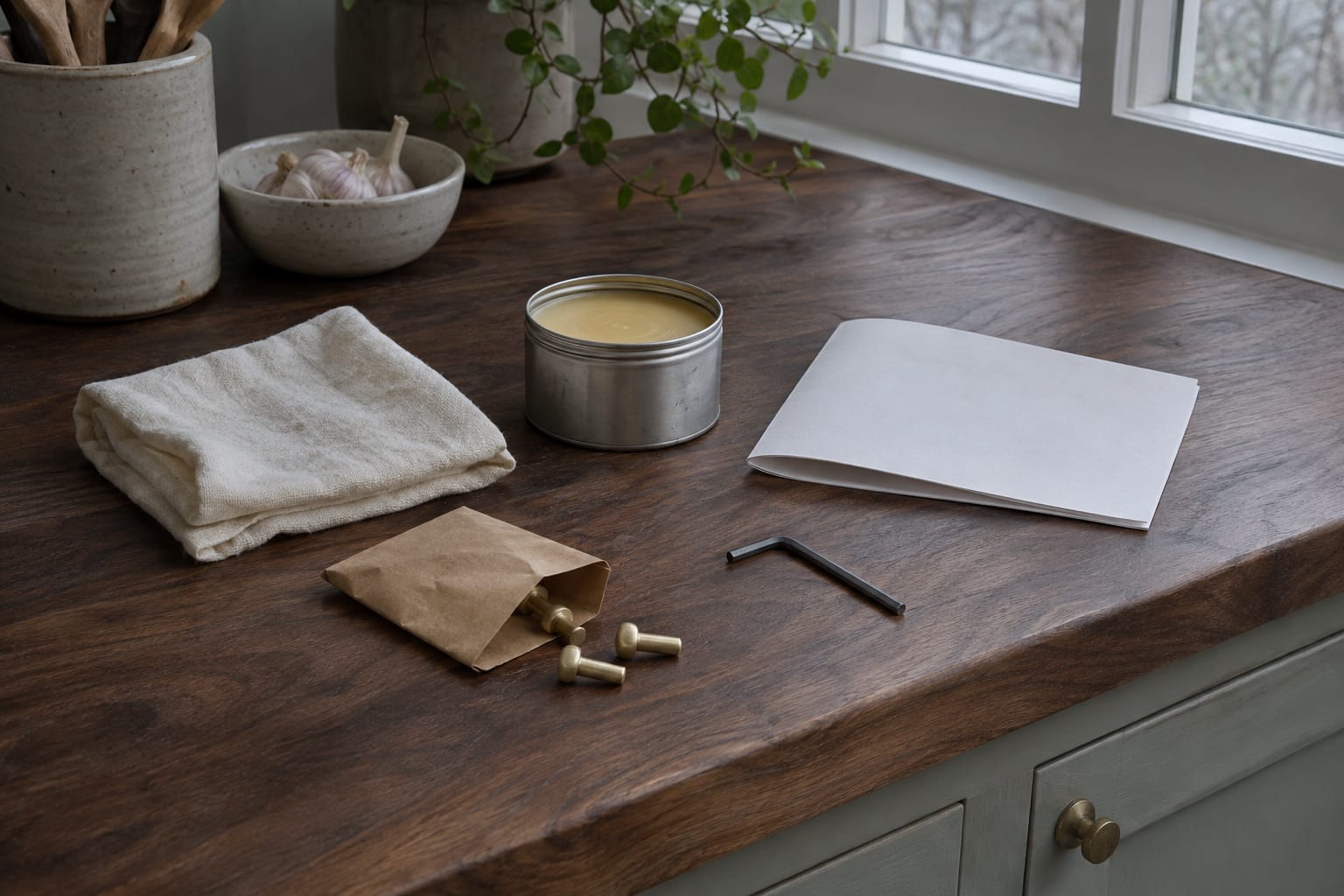
A tin, a cloth, and a visit.
- A tin of the finish your room was made with
- A cotton cloth
- Spare brass shelf pins
- The key for the hinges
- A care sheet for your wood and finish
We come back once after the first season to adjust doors and drawers as the wood settles, look over every scribe, and touch up the finish where the first season has marked it.
Somethingdoesn’t sit right?
Send a photograph and a line about the room. If it is a quarter turn, we will tell you which screw; if it is ours to fix, we will come.
Get in touch