Harlan & ReedMillwork
Sheet A-06
Material schedule
Species · finishes · hardware

Five woods.

All domestic, all solid where it matters, all bought from mills we know. Open a column to read the board.

Here is how each one looks, wears and ages, so you can choose for the room you will have in ten years.

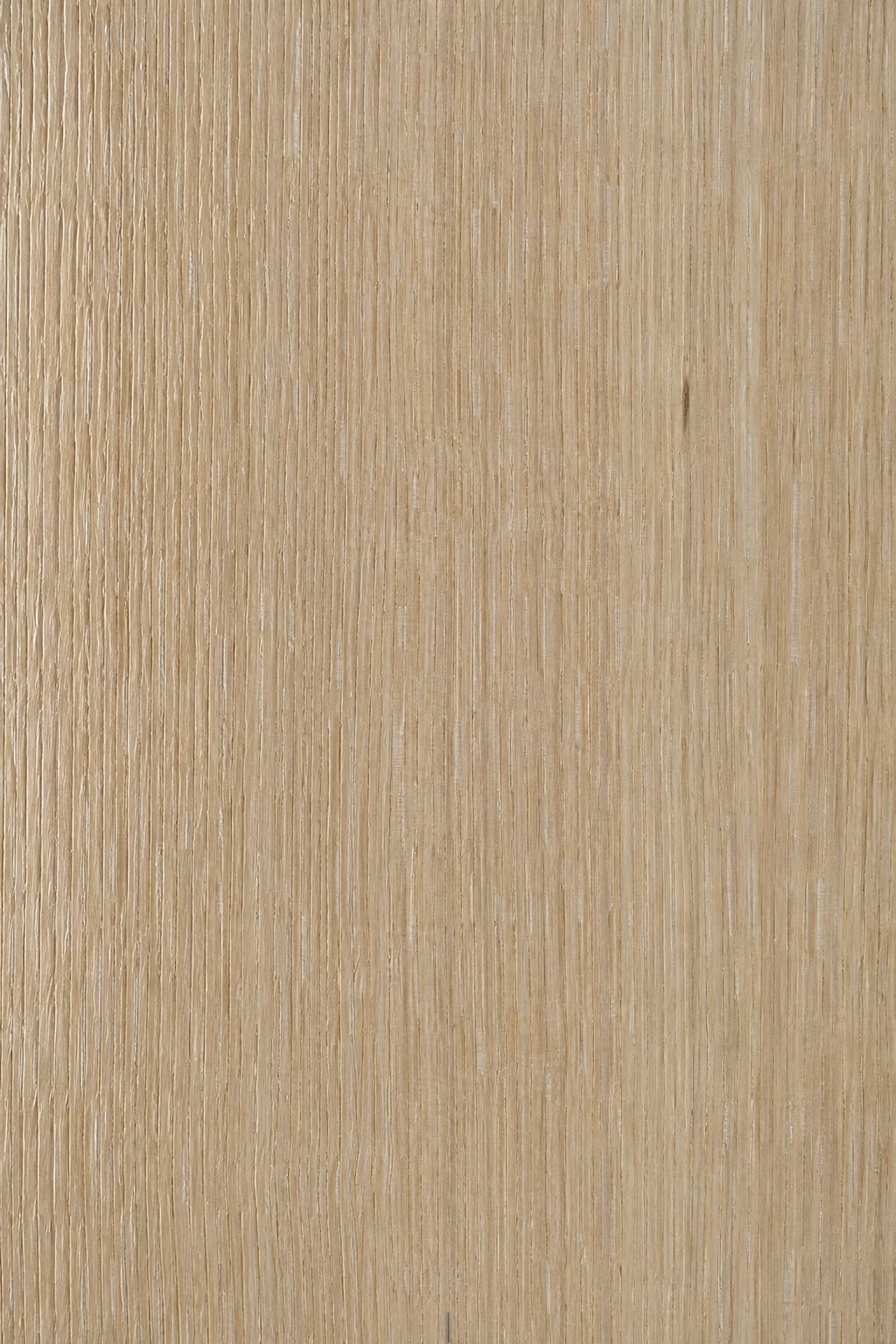
A leaf of white oak veneer in raking light, showing its grain.
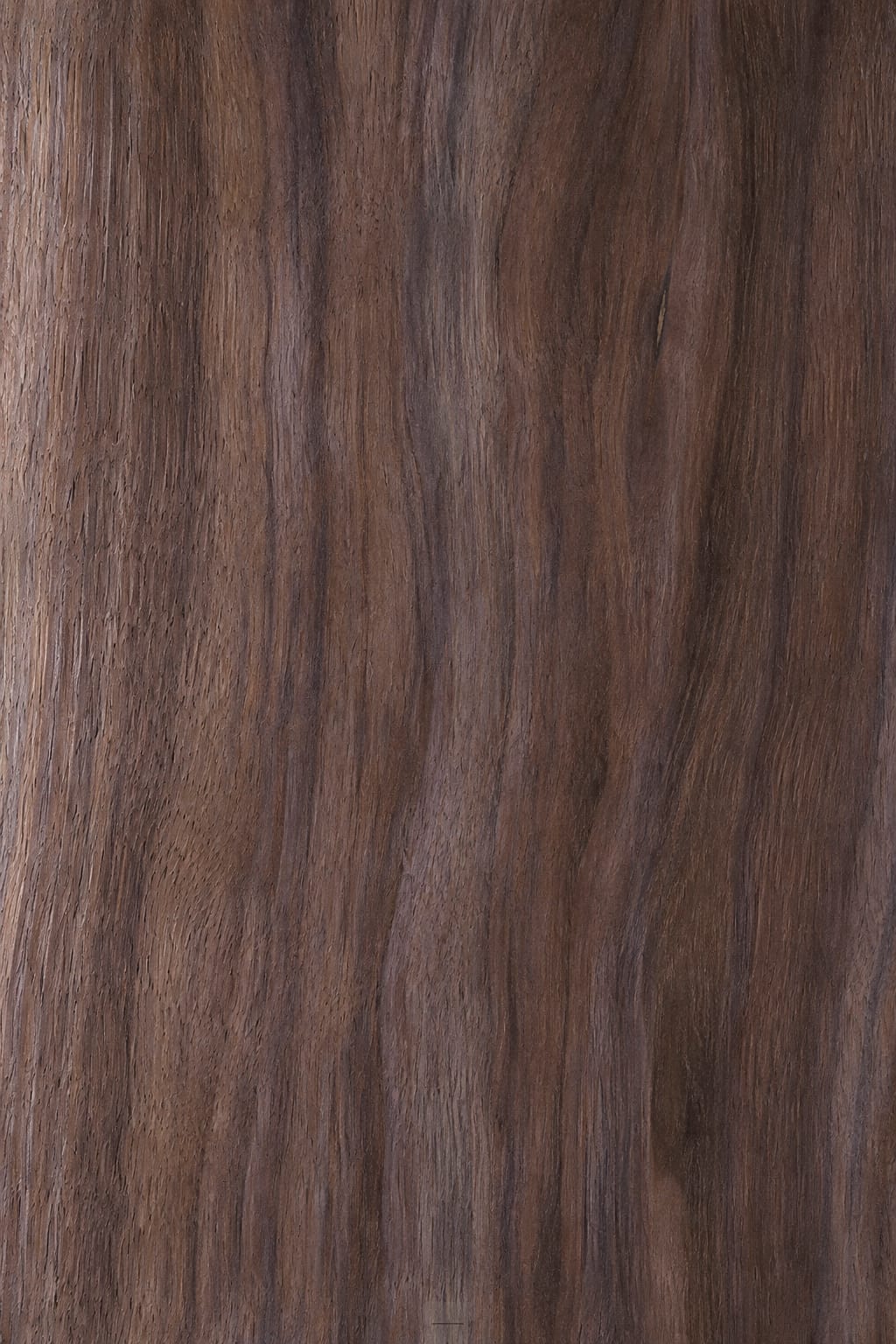
A leaf of black walnut veneer in raking light, showing its grain.
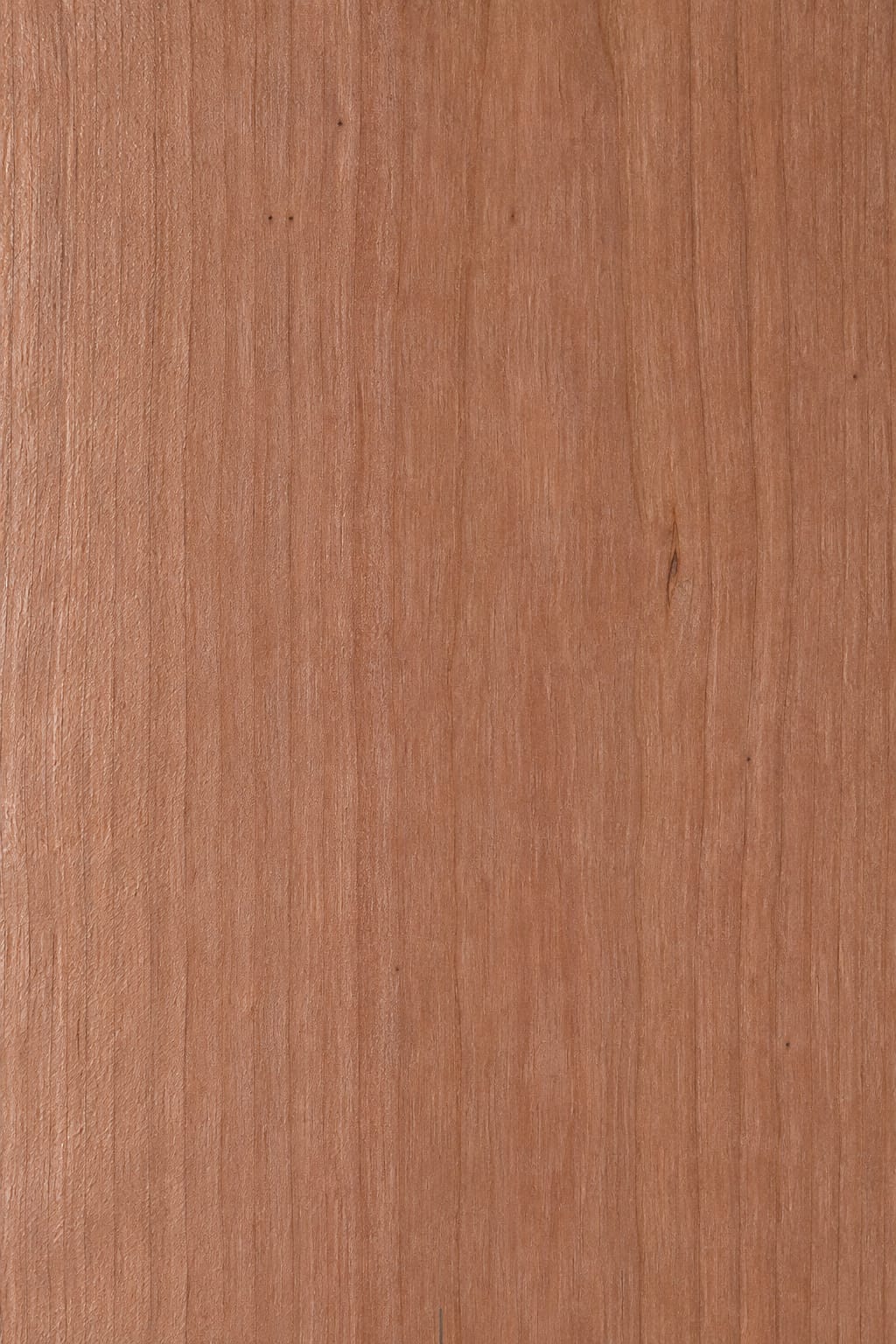
A leaf of black cherry veneer in raking light, showing its grain.
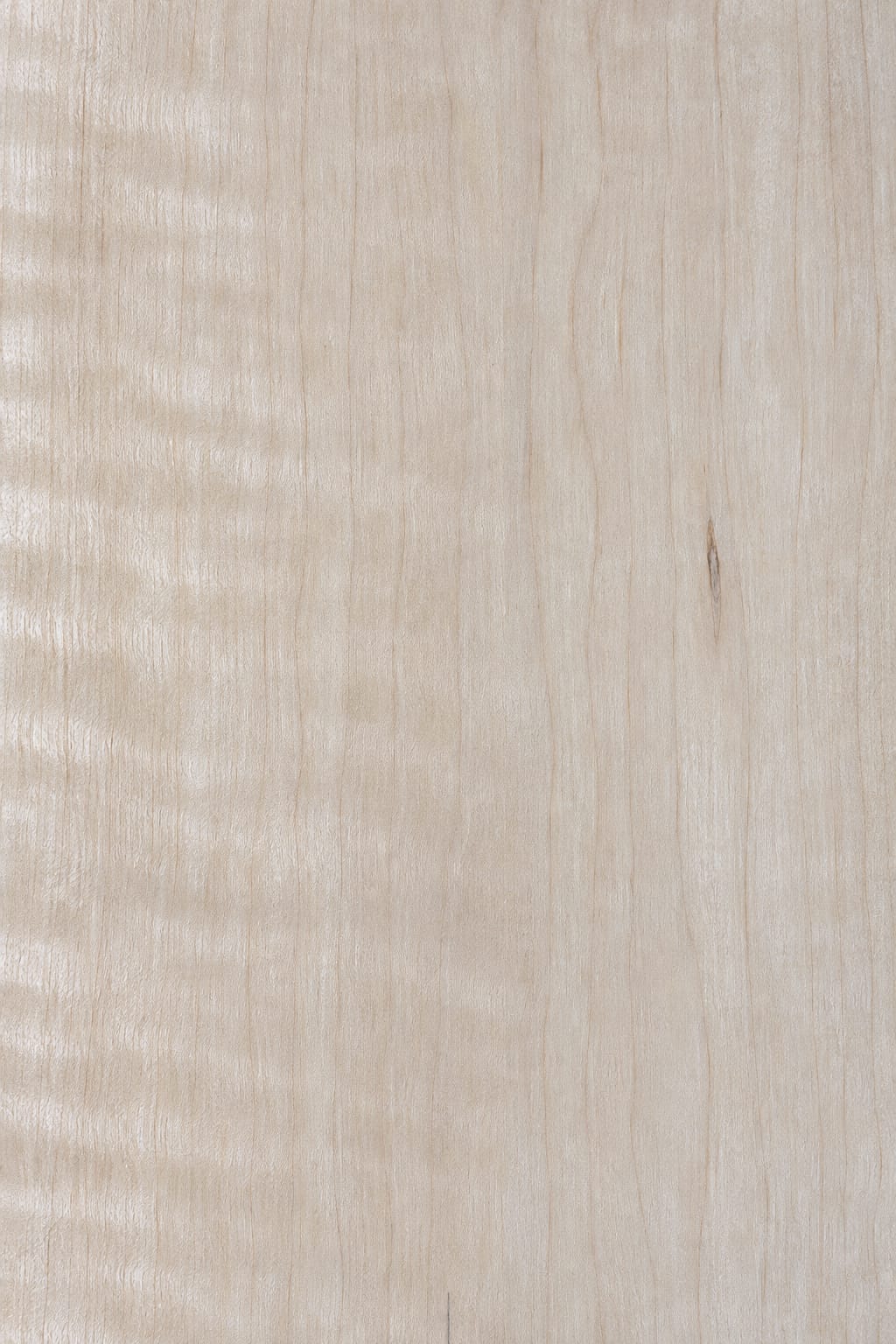
A leaf of hard maple veneer in raking light, showing its grain.
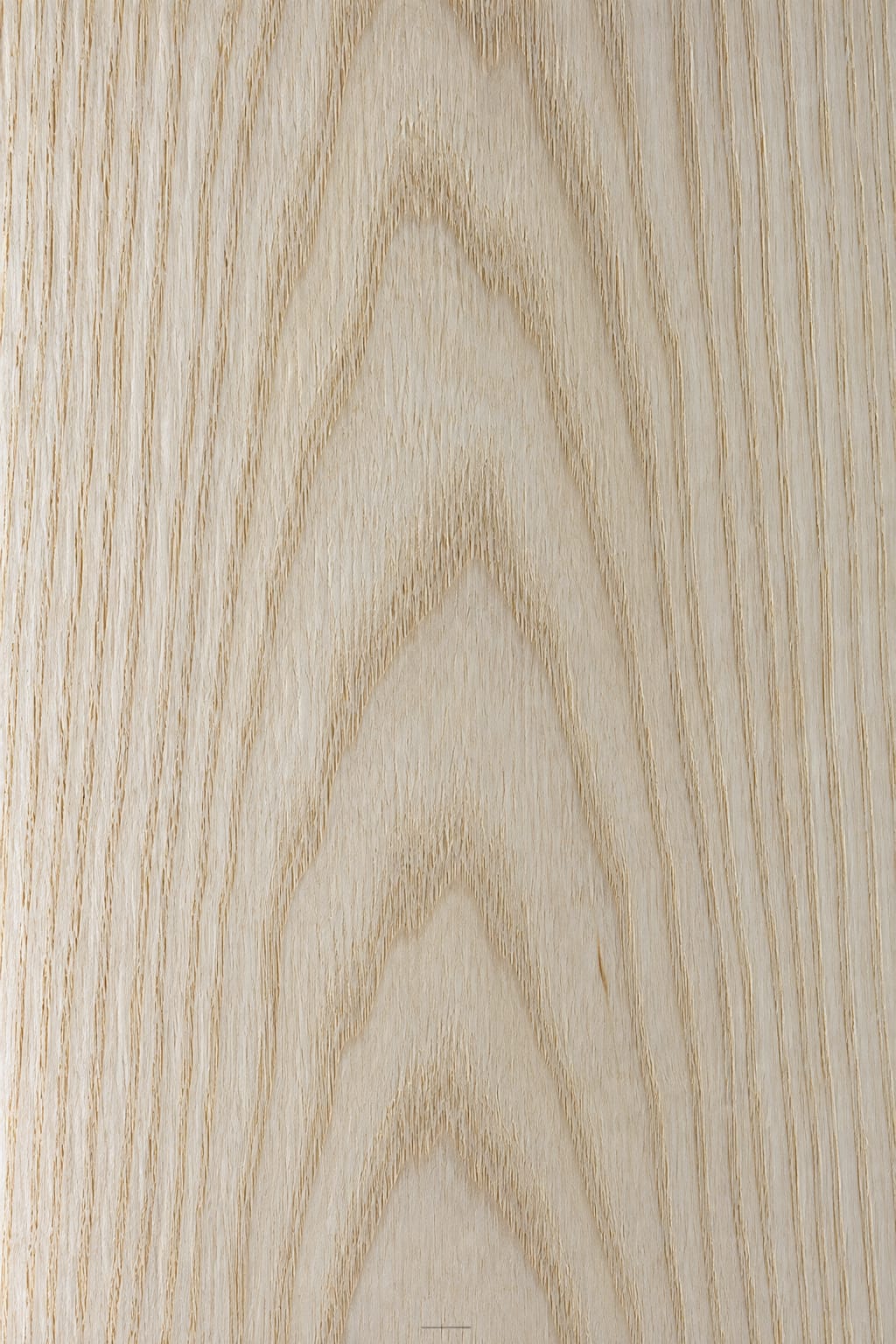
A leaf of white ash veneer in raking light, showing its grain.

Reading the figures

Janka hardness is the force it takes to press a steel ball, 0.444 inches across, halfway into the wood. It predicts dents. It says nothing about wear, stiffness or movement, which is why it is one line of seven here, not a score.

The bars show hardness on a range of 0 to 1,600 lbf, which covers these five. Movement is the shrinkage across the width from green to oven-dry, flat-sawn and quartersawn; rift-sawn boards fall between. Figures are published averages (USDA Forest Products Laboratory, Wood Handbook); every board varies.

Two woods,side by side.

Compare
Against
A squared block of white oak showing its end grain, edge and face, half of it oiled.
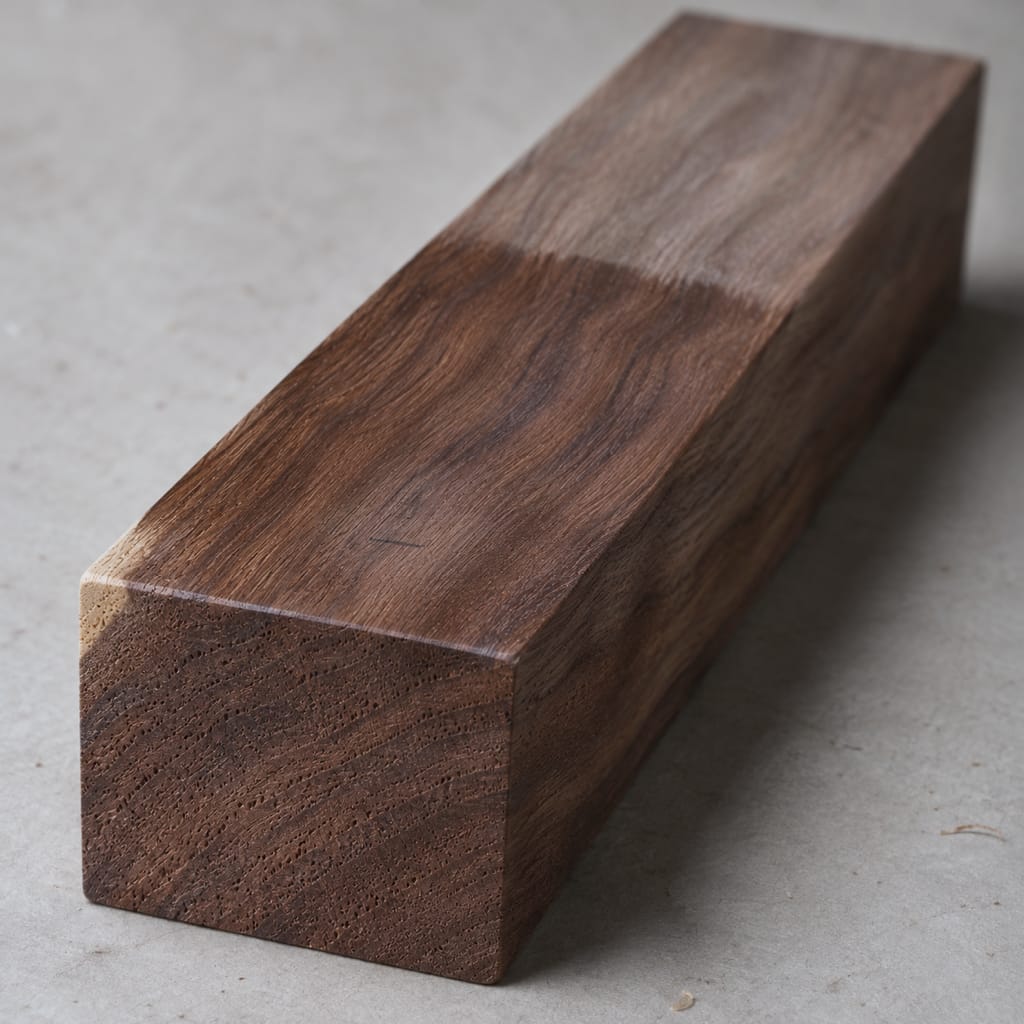
A squared block of black walnut showing its end grain, edge and face, half of it oiled.
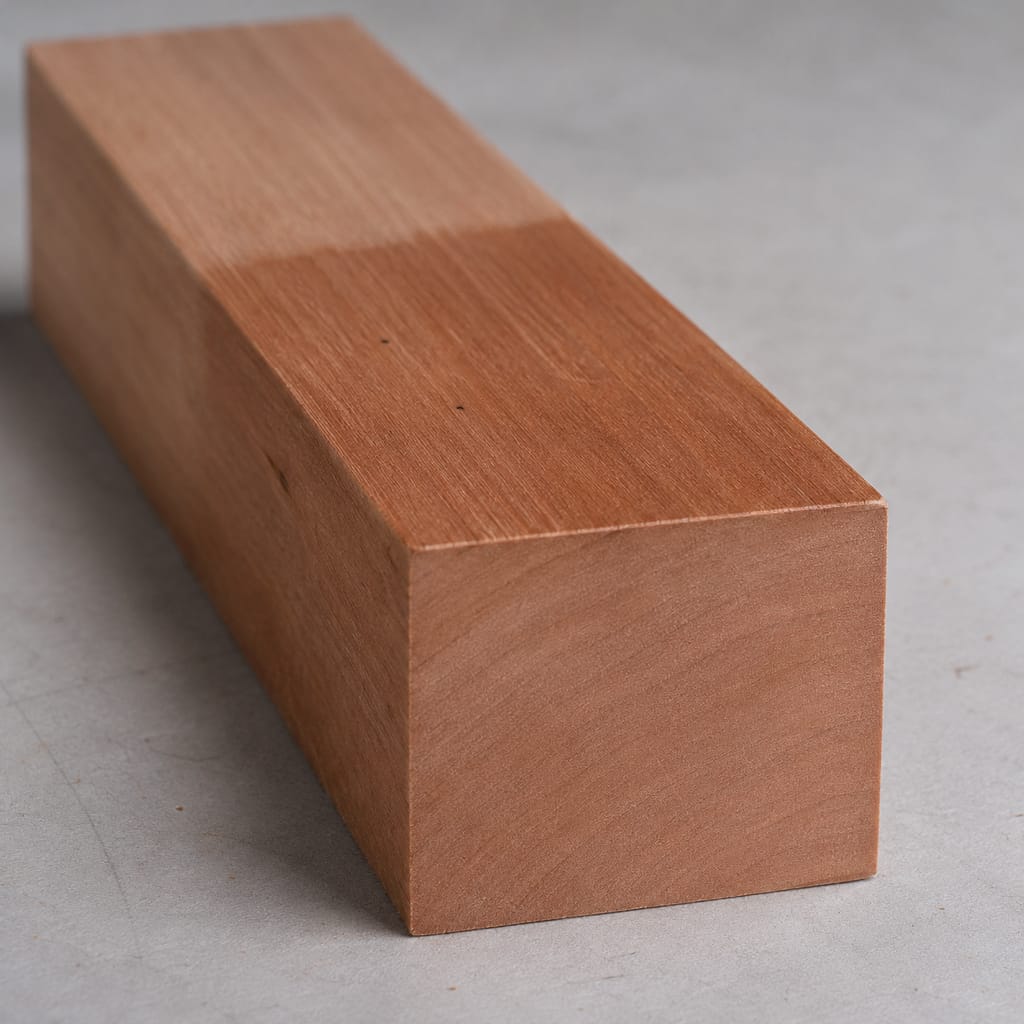
A squared block of black cherry showing its end grain, edge and face, half of it oiled.
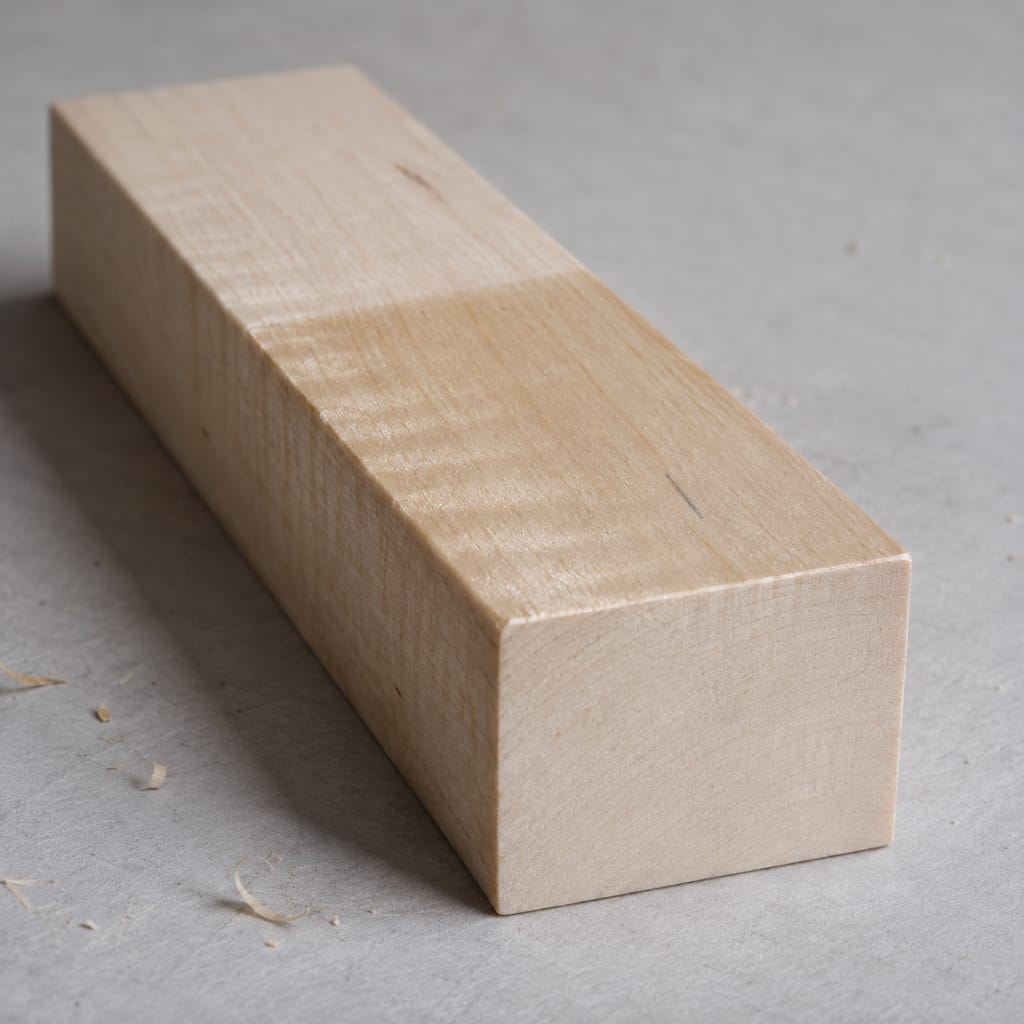
A squared block of hard maple showing its end grain, edge and face, half of it oiled.
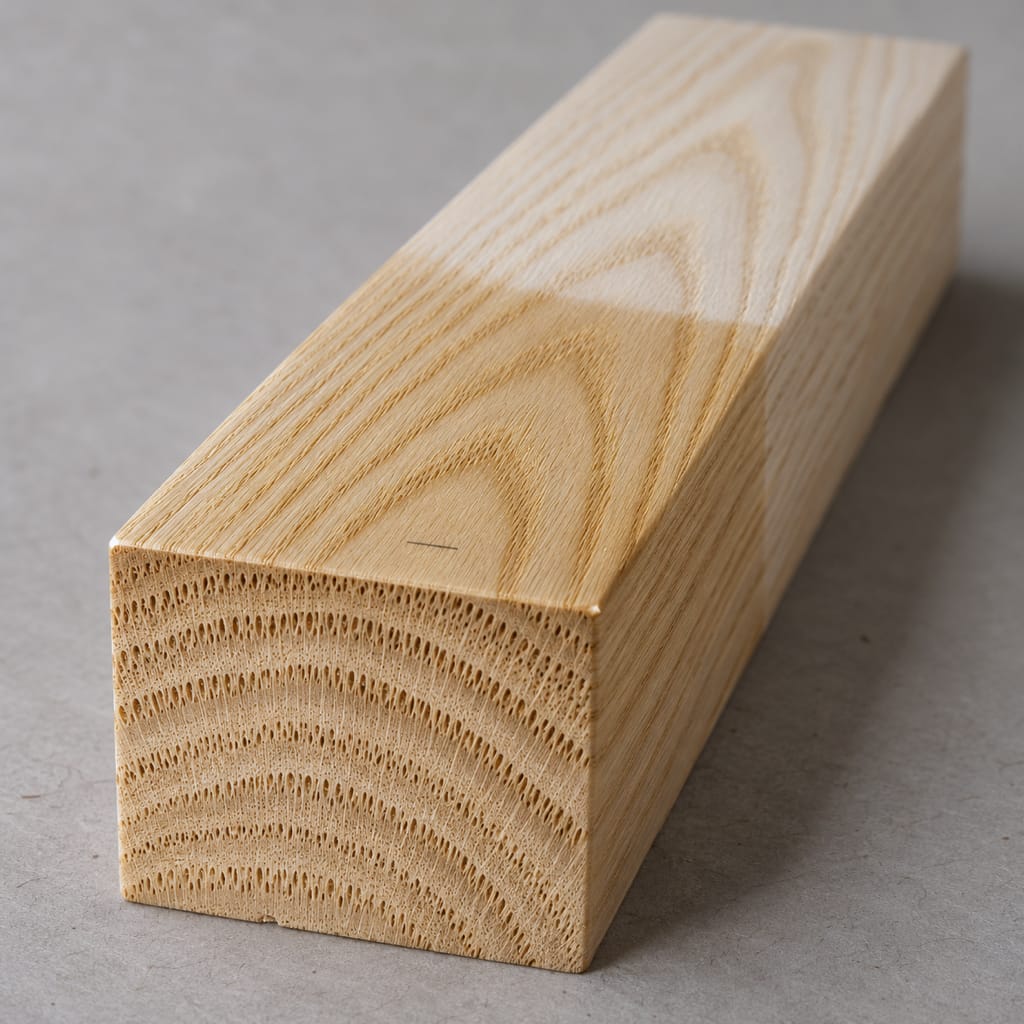
A squared block of white ash showing its end grain, edge and face, half of it oiled.

White oak

Quercus alba
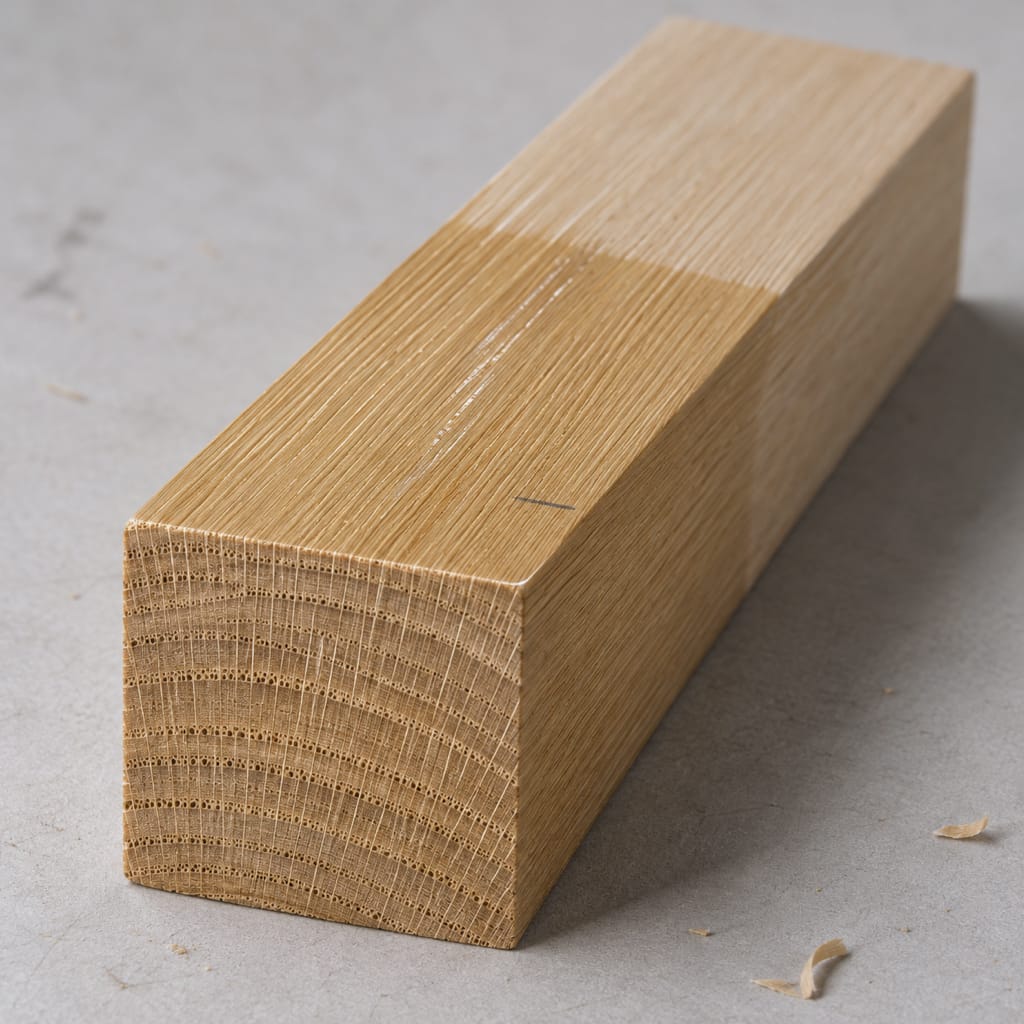
A squared block of white oak showing its end grain, edge and face, half of it oiled.
A squared block of black walnut showing its end grain, edge and face, half of it oiled.
A squared block of black cherry showing its end grain, edge and face, half of it oiled.
A squared block of hard maple showing its end grain, edge and face, half of it oiled.
A squared block of white ash showing its end grain, edge and face, half of it oiled.

Black walnut

Juglans nigra

Hardness
Janka 1,360 lbf
Janka 1,010 lbf
Movement across the width
10.5% flat-sawn, 5.6% quartersawn
7.8% flat-sawn, 5.5% quartersawn
Weight, dried
About 47 lb per cubic foot
About 38 lb per cubic foot
Color, cut and with years
Warms toward honey
Lightens a little toward a warm, even brown
Our finish
Hardwax oil, or fumed for a deeper brown-gray
Oil, rubbed out by hand
Care
Hardwax oil: a damp cloth, a drop of mild soap. Keep wet steel off it: the tannin in oak turns black where iron and water meet.
Oil: dust, then a damp cloth. Re-oil when the surface looks dry. Strong sun lightens it, so we draw it away from south windows.
Best for
Kitchens, baths, anything that works hard
Libraries, studies, kitchens with gentle hands

White oak is harder than black walnut (Janka 1,360 against 1,010 lbf) and moves more across its width. With age, white oak warms toward honey; black walnut lightens a little toward an even brown.

Sheet A-06.2

One board,five finishes.

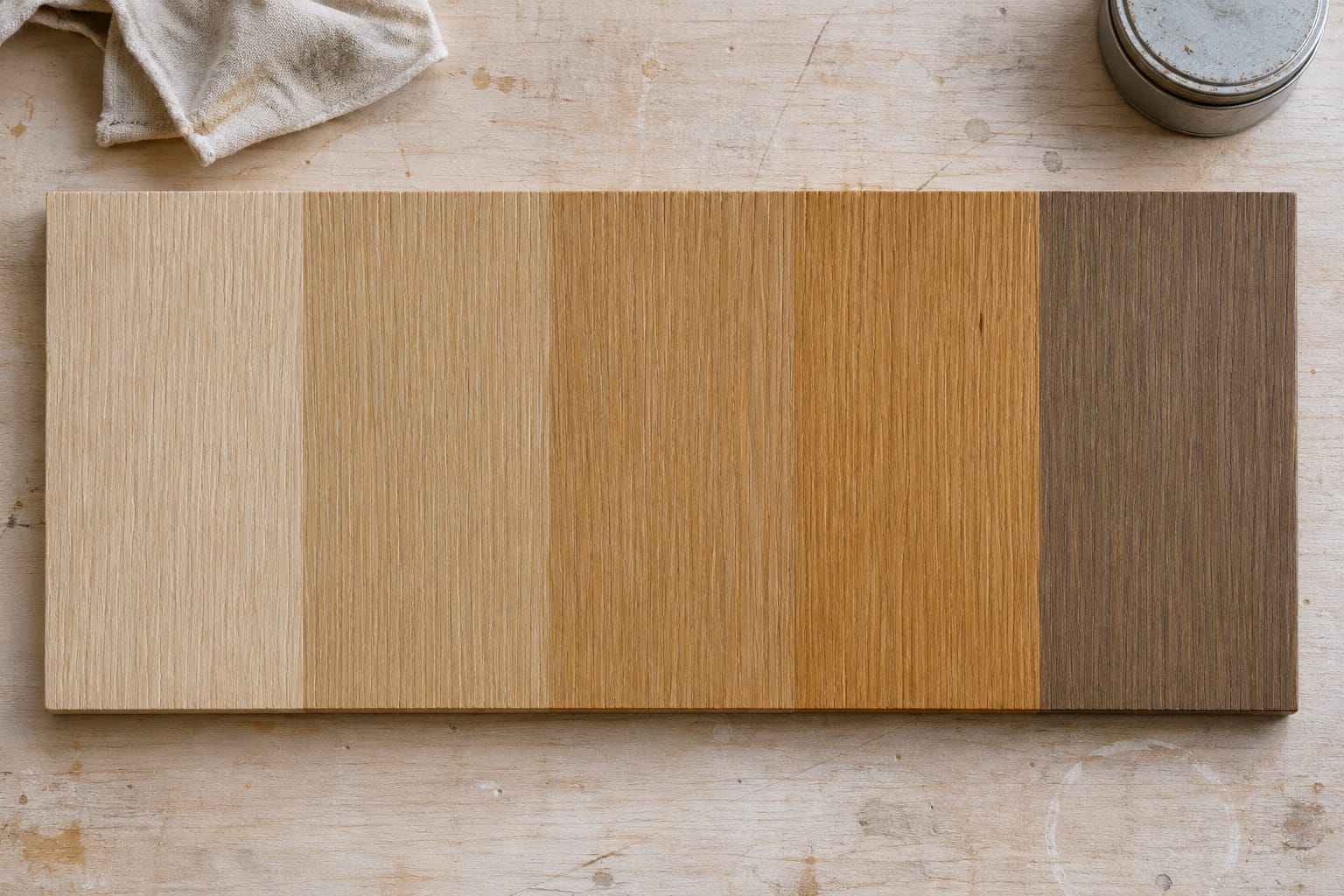
The same piece of rift-sawn white oak, in the same light. Bare on the left for comparison; the four finishes we use beside it.

A white oak board finished in five bands: bare wood, hardwax oil, hand-rubbed oil, amber shellac and fumed brown-gray oak.BareHardwax oilOilShellacFumed
Fig. 6.1From above, in even daylight: the color each finish gives the same oak.
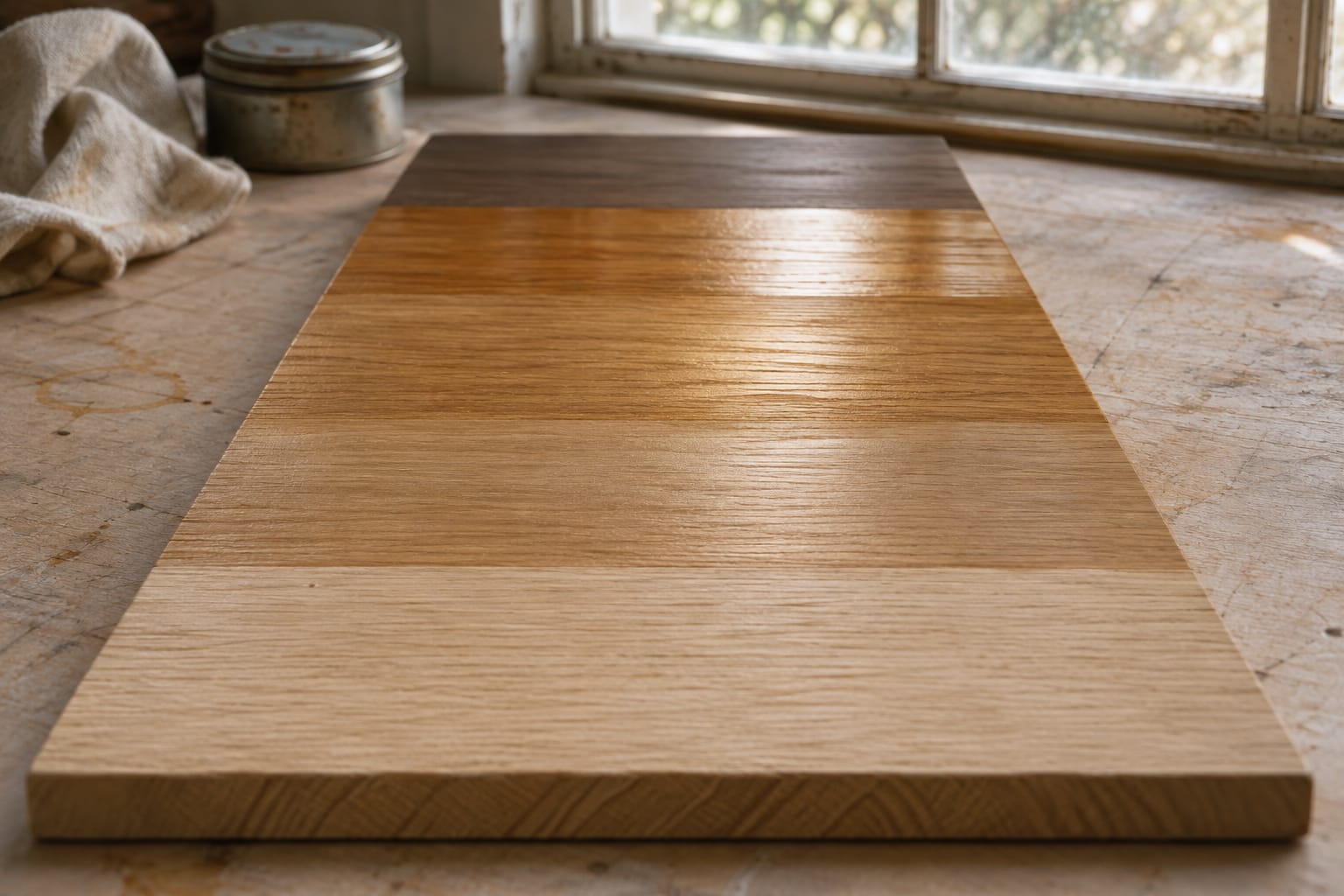
The same five-band oak board from a low angle against the window, the sheen of each band visible.
Fig. 6.2From a low angle against the window: matte, low satin, a soft glow, a gentle gloss, matte again.

How to read the board

Color is what the room will be. Sheen is how the light moves across it, and how much a fingerprint or a ring will show.

Every finish here is applied by hand in the shop, inside and out, and left to cure before it travels. The tin we leave you is the same one.

Living with each finish, and fixing a mark
The finish sheet
FinishFeelSheenCleaningWaterRepairWhere we use it
Hardwax oilLike wood, faintly waxyMatte to low satinDamp cloth, a drop of mild soapShrugs off splashes; wipe up standing waterShallow marks: sand lightly and re-oil; light scratches usually blendOak, maple and ash; kitchens, baths and mudrooms
Hand-rubbed oilSilky and warmA soft glowDust, then a damp clothWipe spills promptly; rings can showRe-oil the area; light marks usually softenWalnut and cherry; libraries and quieter kitchens
ShellacSmooth and hardA gentle glossDust with a dry clothWater, alcohol and heat mark itPadded in with fresh shellacFurniture and cherry rooms, away from water
Fumed, then oiledAs the oil over itMatteAs hardwax oilAs hardwax oilLight marks re-oiled; anything through the fumed color is a job for usWhite oak, where a deeper brown-gray suits the room

Sheet A-06.3

What goes onthe wood.

Six pieces, chosen to age with the wood rather than against it. Open a mark to see it in the hand.

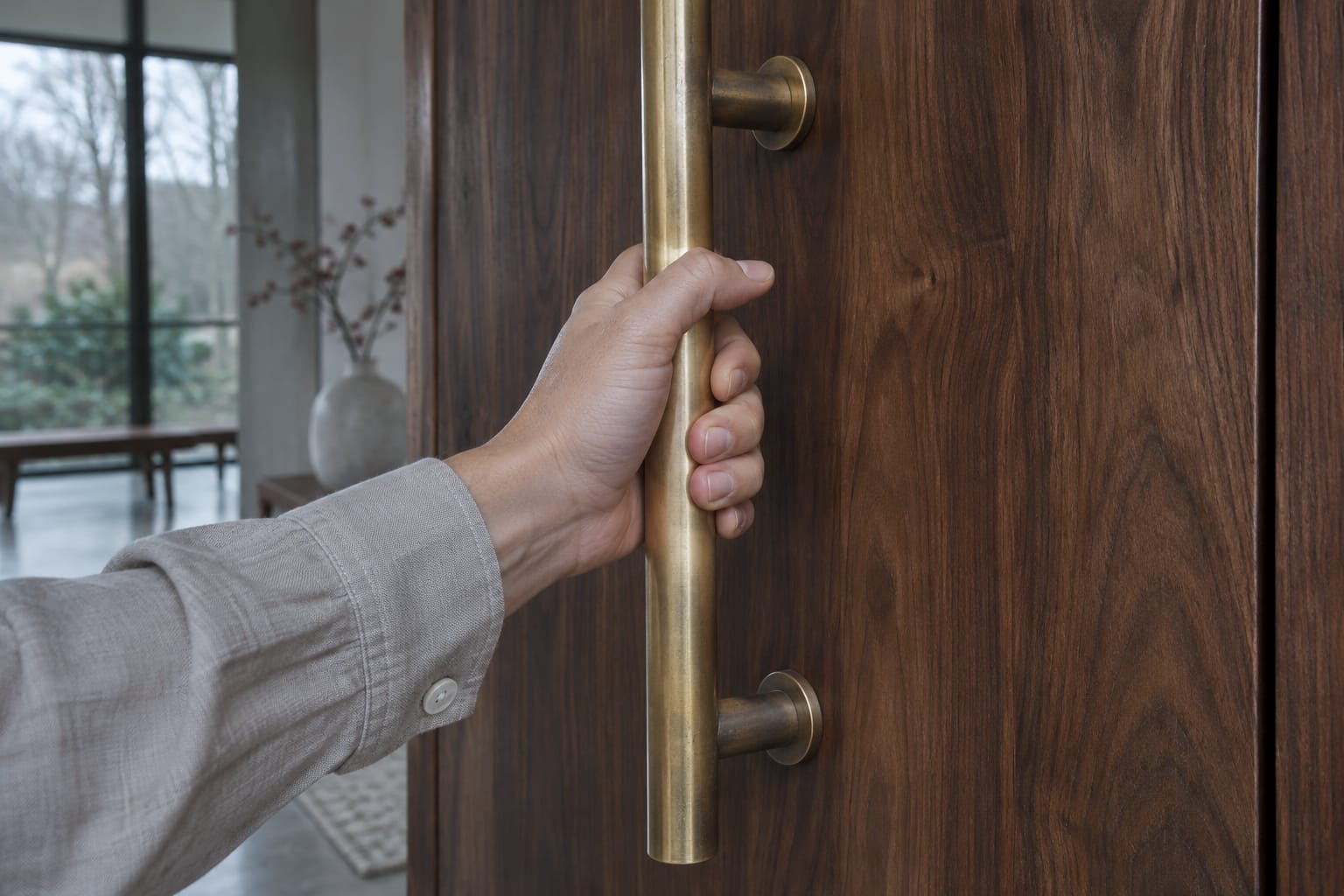
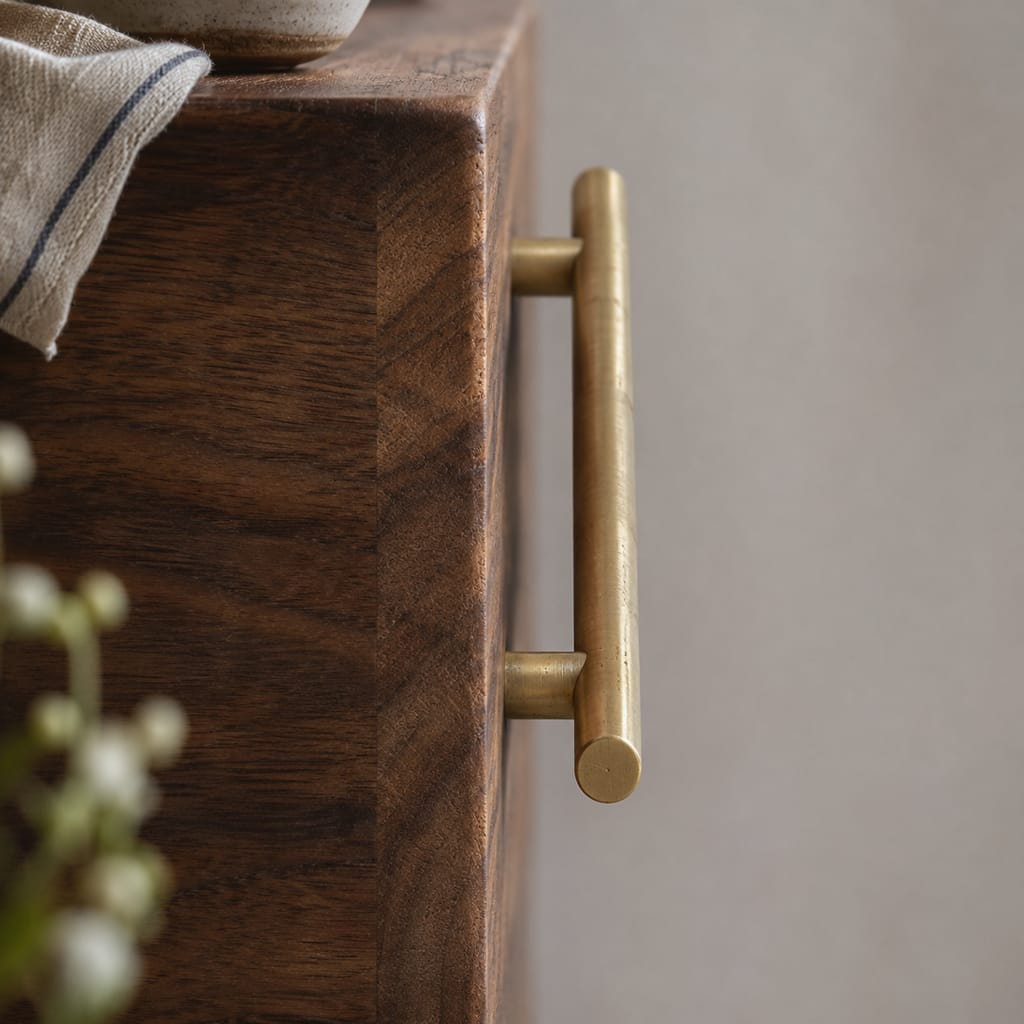
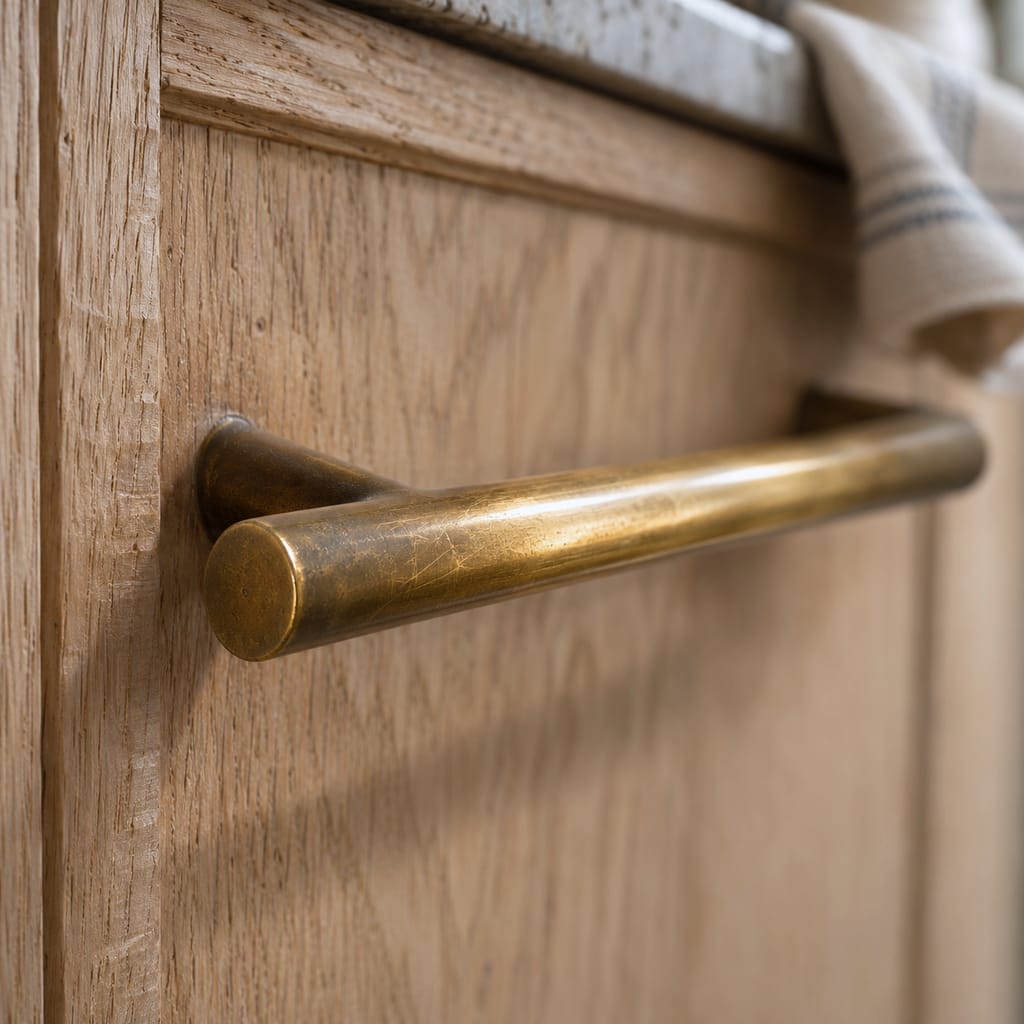
  1. H-1Unlacquered brass bar pullTall doors and drawers in the kitchen and library
    A hand gripping a long unlacquered brass bar pull on a tall walnut door.
    The same bar pull in profile: its two round posts and the gap behind the bar.
    A brass pull after years of use: bright in the middle where fingers grip, darker toward the posts.

    How it ages. Darkens where hands don’t touch it and stays bright where they do, which is the point.

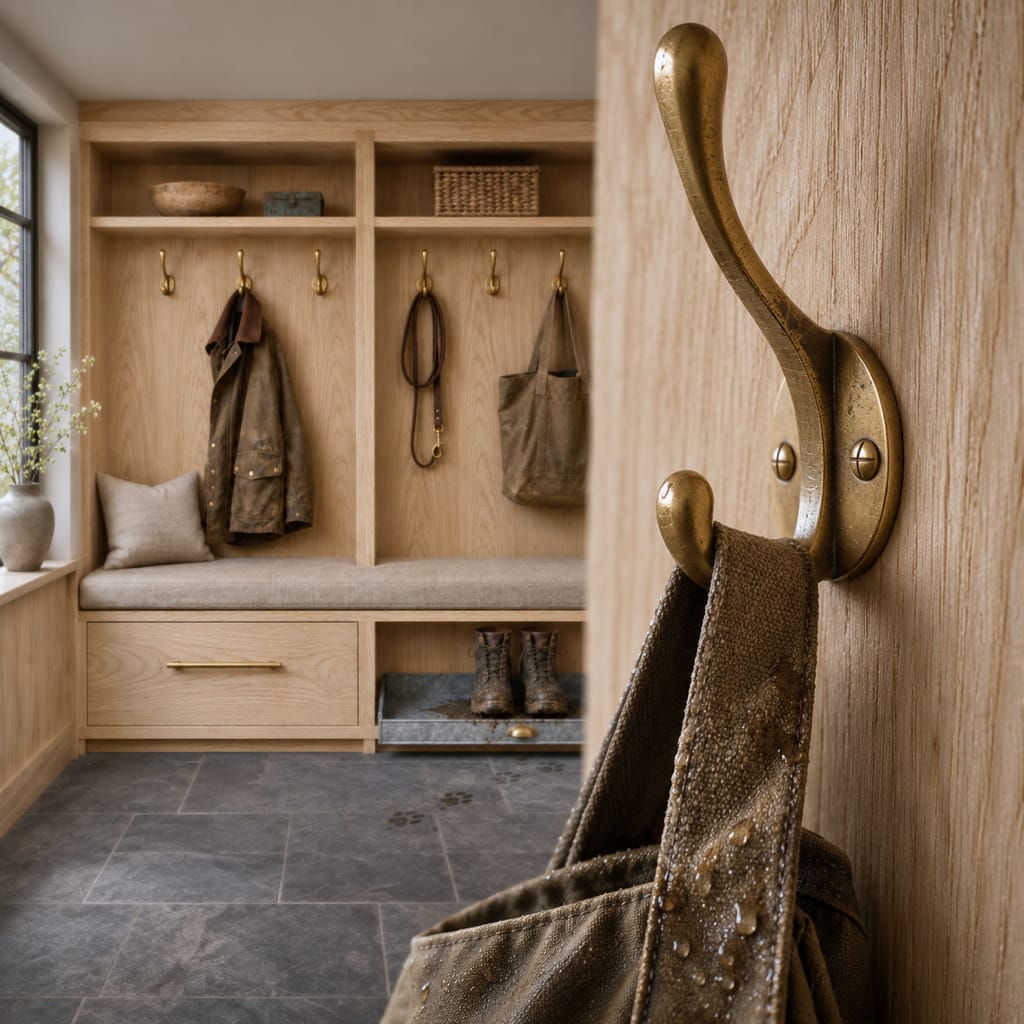
  2. H-2Solid brass hook, through-boltedThe mudroom: one hook for a wet coat and a loaded bag
    A solid brass double hook on the ash end panel, the heads of its two through-bolts in the base plate.

    How it ages. Patinas like the pulls. Through-bolts carry the load: into blocking in the wall behind the back panels, and right through the end panel to barrel nuts on its far face.

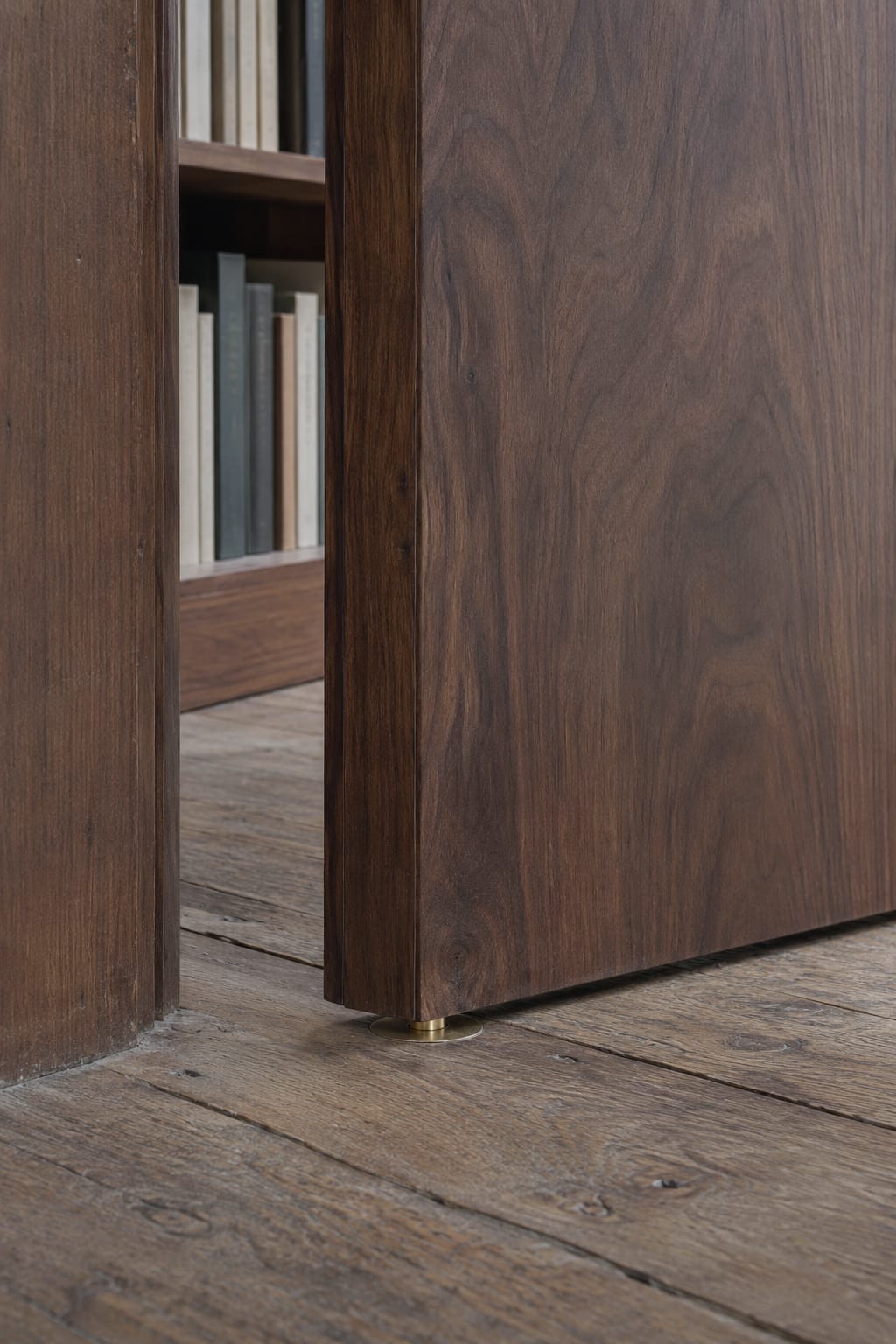
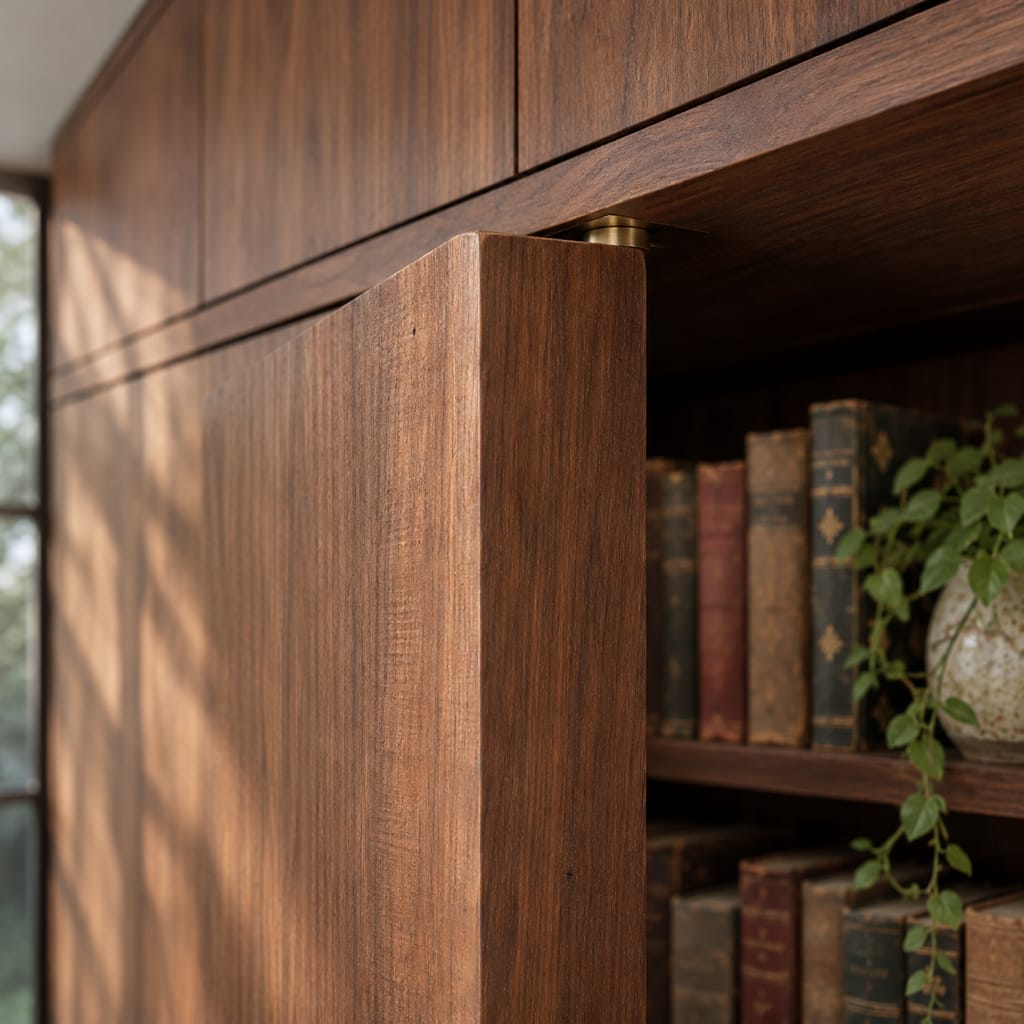
  3. H-3Concealed pivotFull-height library doors
    The foot of a tall walnut door swung open on its concealed brass pivot.
    The top pivot set into the head of the door.

    How it ages. Hidden in the head and foot of the door; nothing on the face to age.

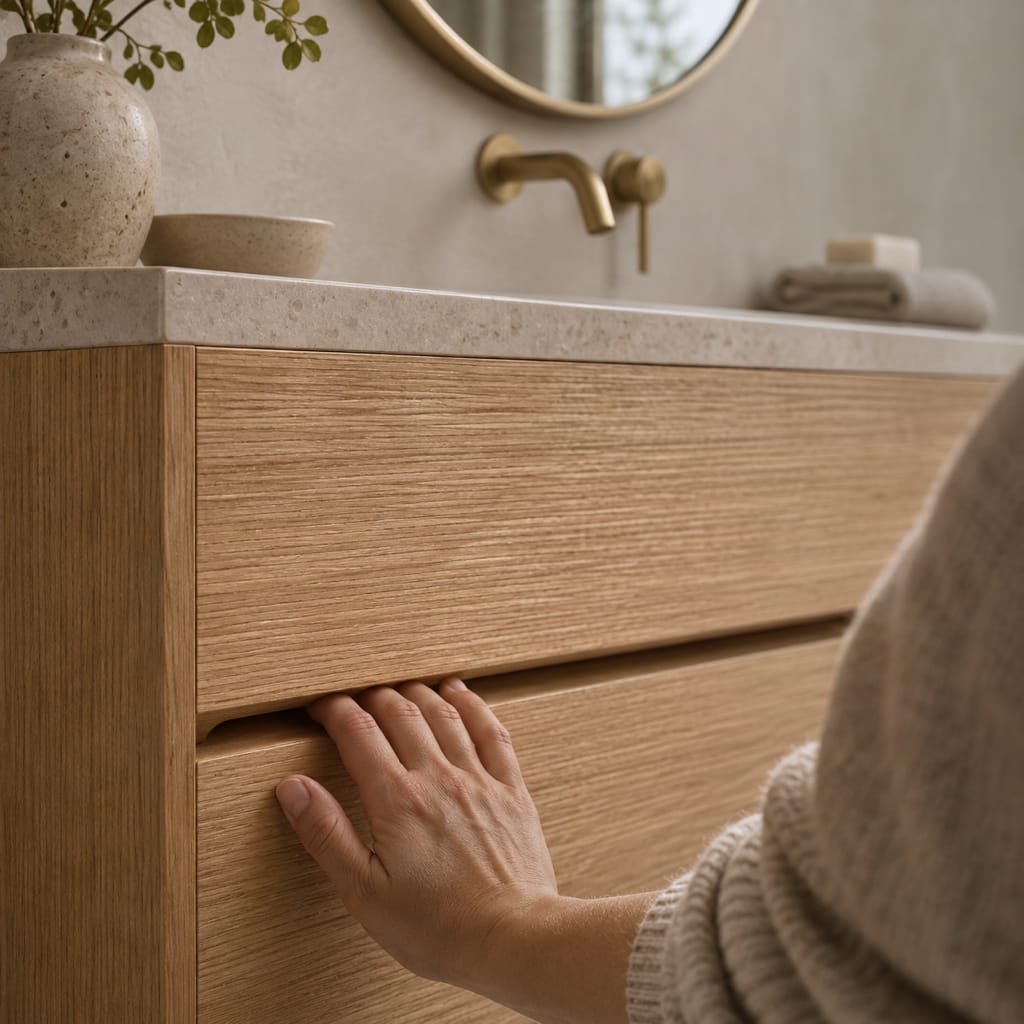
  4. H-4Reveal pull (no hardware)The bath vanity, where a pull would catch a towel or a hip
    Fingertips hooked into the shadow reveal under a white oak drawer front.

    How it ages. The undercut edge is sealed like every other face.

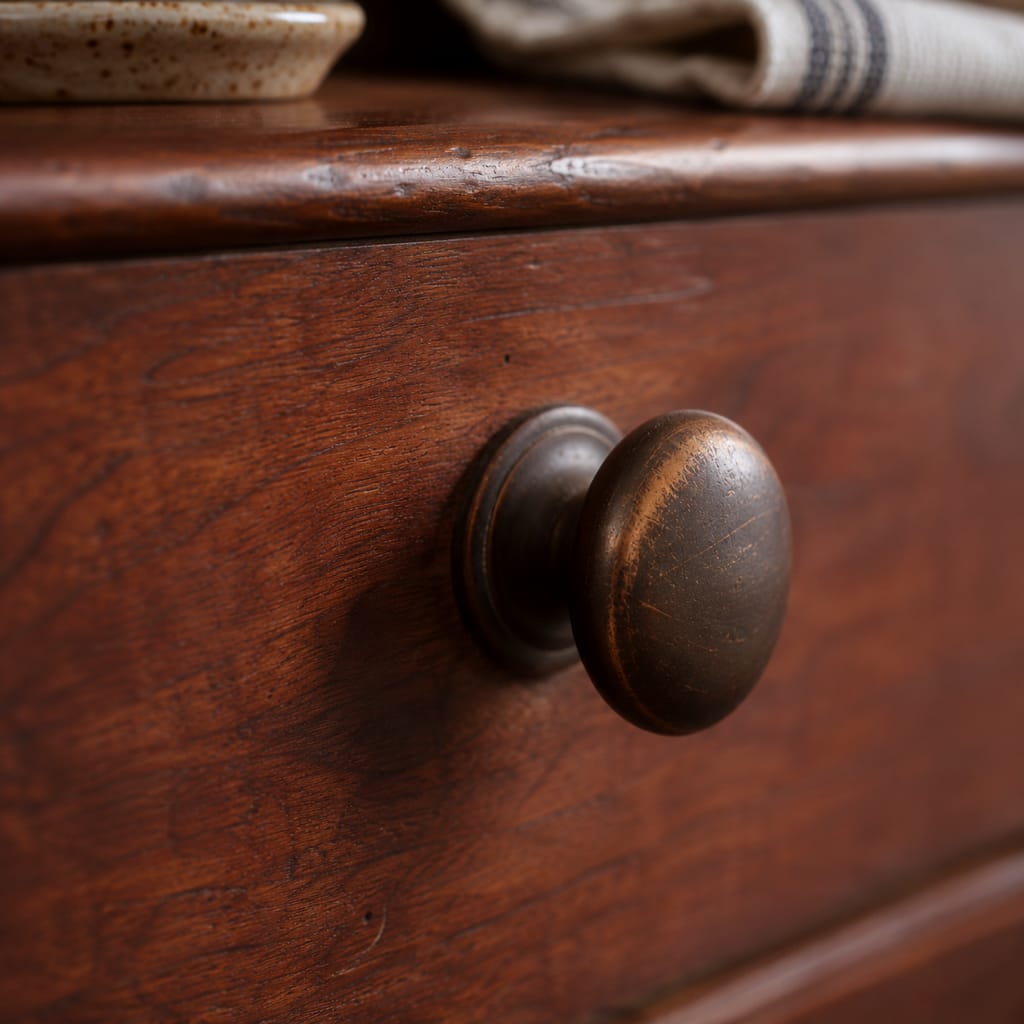
  5. H-5Oil-rubbed bronze knobWalnut and cherry rooms where brass would be loud
    A small oil-rubbed bronze knob on a cherry drawer front, its high point rubbed back to copper.

    How it ages. Warmer and quieter; the high points rub back to copper.

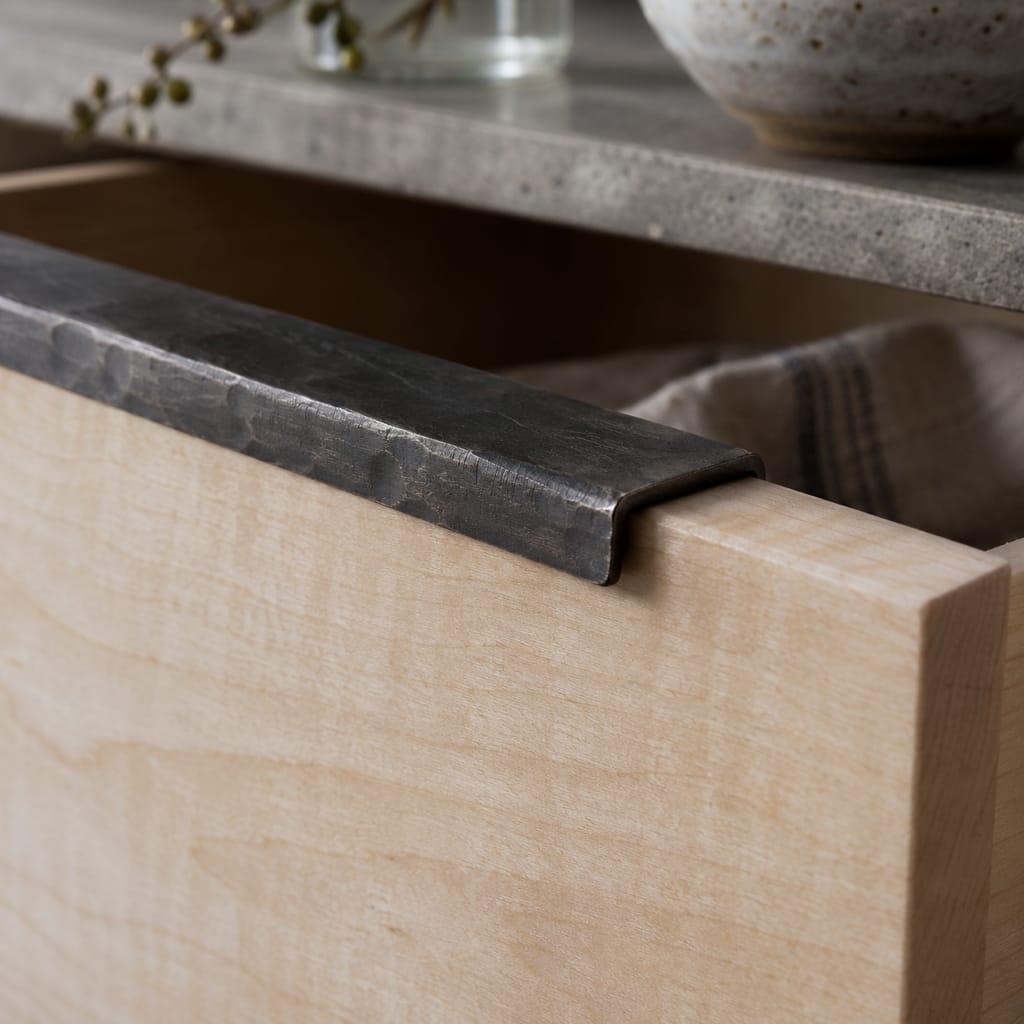
  6. H-6Blackened steel edge pullMaple drawers; and the flats we hide inside shelves
    A slim blackened steel edge pull along the top of a hard maple drawer front.

    How it ages. Hand-finished and waxed; it holds its color and hides fingerprints.

See them inyour light.

After the first visit we send a finished board in the wood and finish you are leaning toward. Live with it for a week before you decide.

Start a consultation